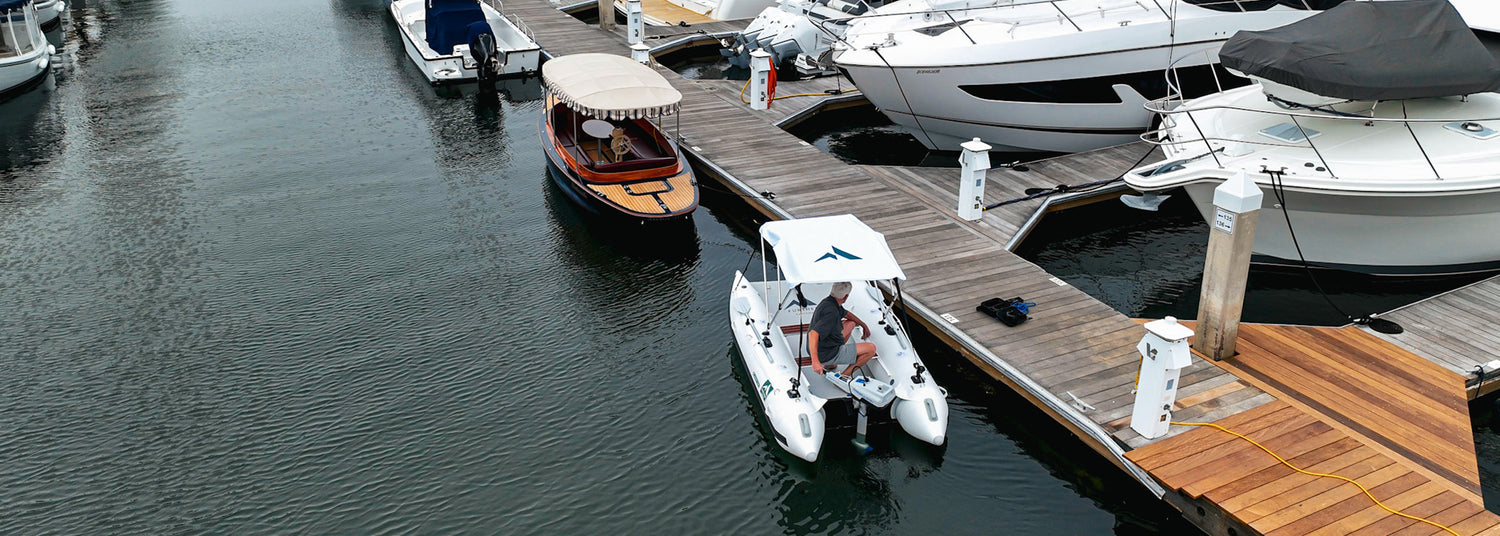
Electric boat motors are rated in kilowatts (kW), not horsepower (HP), which trips up most first-time buyers. The quick conversion is 1 kW ≈ 1.34 HP, so a 3 kW electric outboard performs roughly like a 4 HP gas engine, and a 10 kW motor sits closer to a 13-14 HP gas outboard. Beyond that number, though, "equivalent" power doesn't always mean equivalent performance -and that's where most of the confusion actually starts. Electric outboard naming can also be misleading. For example, despite its name, the Mercury Avator 7.5e produces 750 watts of power, not 7.5 HP, making its actual output closer to that of a roughly 3 HP gas outboard.
Why kW and HP Aren't a Perfect Match
Horsepower was built around the way gas engines produce power -peaking at higher RPMs and tapering off. Electric boat motors deliver near-instant torque from a standstill, so a "13 HP-equivalent" electric outboard can feel snappier off the line than a comparably rated gas engine, even if its top-end speed is a touch lower. This is exactly why boat shoppers who only compare kW-to-HP numbers on paper are often surprised (in a good way) by how an electric motor actually handles.
kW to HP Conversion Table
|
Electric Motor (kW) |
Approx. Gas HP Equivalent |
Typical Use |
|
1 kW |
1.3 HP |
Small trolling motor, kayaks, tenders under 10 ft |
|
3 kW |
4 HP |
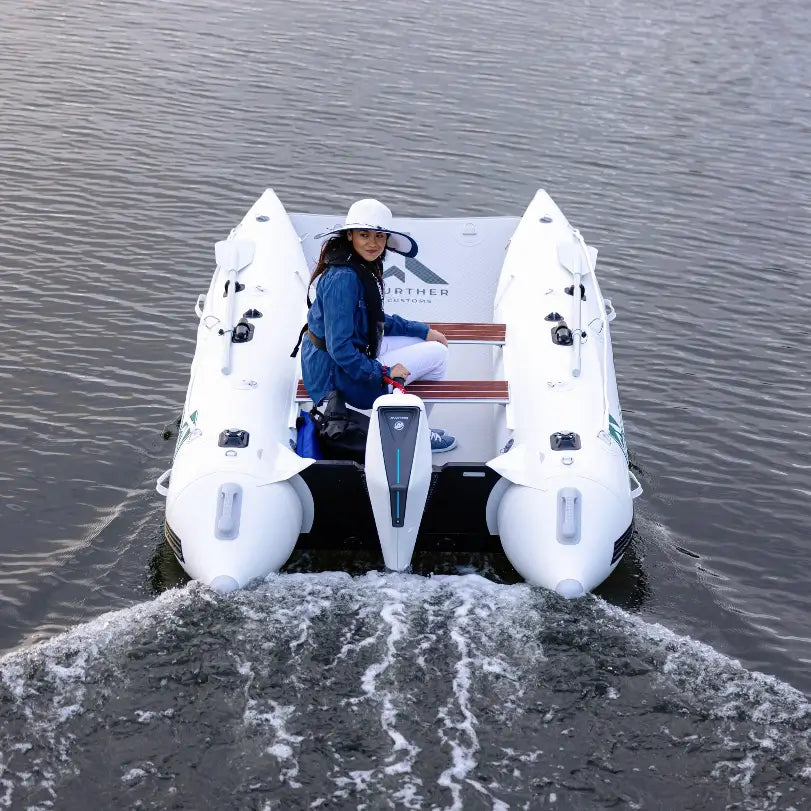
Inflatable dinghies, catamaran tenders, light day boats |
|
6 kW |
8 HP |
Mid-size tenders, small pontoons |
|
10 kW |
13-14 HP |
RIB tenders, larger inflatables, light cruising |
|
15 kW |
20 HP |
Small runabouts, pontoon boats |
|
25 kW+ |
33+ HP |
Larger day boats, performance applications |
Use this table as a starting point, not gospel -hull design, weight, and prop selection shift real-world performance in either direction.
Range: The Question That Actually Matters More Than Power
Horsepower tells you how a motor accelerates; it says very little about how long you can run it. Electric boat motor range depends on three things: battery capacity (kWh, not just voltage), boat weight and hull efficiency, and throttle habits. A lightweight inflatable catamaran tender running at a moderate, steady speed can often stretch a single charge across several hours of cruising, while the same battery pushed at wide-open throttle on a heavier hull might drain in under an hour. If range is your top priority, ask any seller for real-world runtime at cruising speed, not just top speed -that's the number that predicts your actual day on the water.
Electric Outboard Motor vs. Electric Trolling Motor
These two terms get used interchangeably, but they're built for different jobs. An electric trolling motor is typically a low-power, mount-on-the-transom-or-bow unit designed for slow, quiet maneuvering -think fishing boats easing along a shoreline. An electric outboard motor is a full propulsion system meant to replace a traditional gas outboard entirely, powering the boat from dock to destination. If you need a primary means of propulsion for a tender, dinghy, or small catamaran, you're shopping for an electric outboard, not a trolling motor, even though both run on the same basic technology.
Best Uses for Electric Boat Motors
Electric propulsion has matured well beyond the "quiet backup option" reputation it had a few years ago. It's now a legitimate primary choice for inflatable catamaran tenders, harbor cruising, lake boating in no-wake zones, and any owner who wants to skip fuel, oil changes, and engine noise altogether. It's less ideal -for now -as a sole motor for long offshore runs or towing-heavy watersports, where gas or hybrid setups still hold an edge on sustained high-speed range.
Frequently Asked Questions
Is a 3 kW electric motor strong enough for a small boat?
Yes, for lightweight inflatables and catamaran tenders under roughly 10-12 feet, a 3 kW motor (about 4 HP equivalent) is generally sufficient for calm-water cruising.
How is kW converted to HP for boat motors?
Multiply the kW rating by 1.34 to get an approximate horsepower equivalent (or divide HP by 1.34 to get kW).
Do electric boat motors lose power over time like batteries do?
The motor itself doesn't lose power, but usable range will gradually decrease as the battery ages, similar to any lithium battery system.
Are electric outboards good for saltwater use?
Many are, provided they're rated for marine/saltwater use and rinsed after each outing -always confirm saltwater compatibility with the manufacturer.
Not sure what size electric motor fits your tender?
Further Customs' inflatable catamaran tenders are purpose-built to pair efficiently with electric outboards, giving you a lighter, more stable hull that stretches every kWh further. Talk to our team about matching the right motor to your boat, or browse our electric-ready catamaran tenders to see the difference hull efficiency makes on the water.