
From quiet electric cruising to 20+ mph with a gas outboard, inflatable catamarans can deliver impressive performance from relatively modest horsepower.
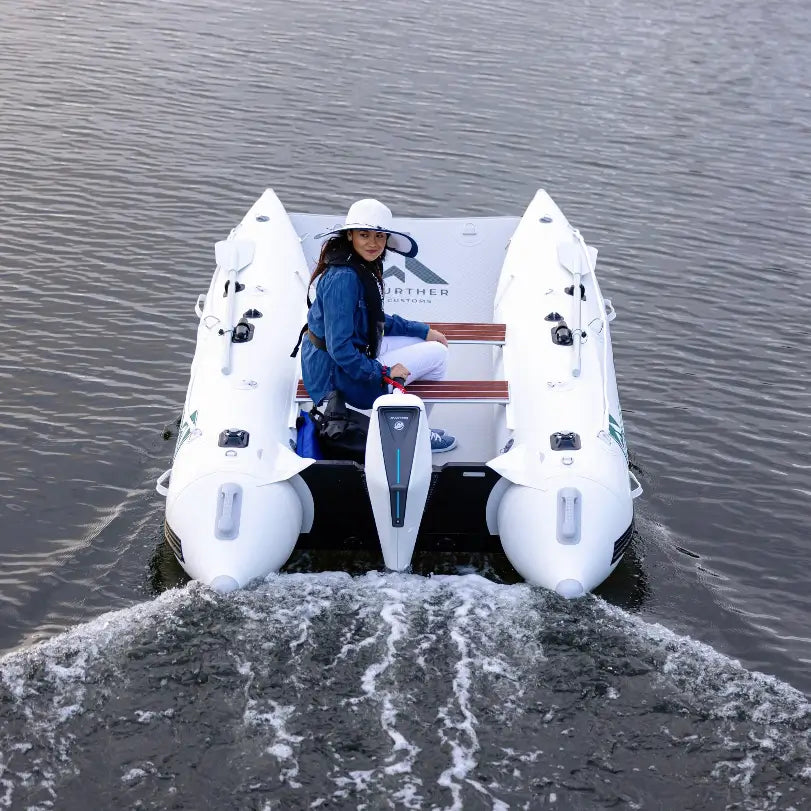
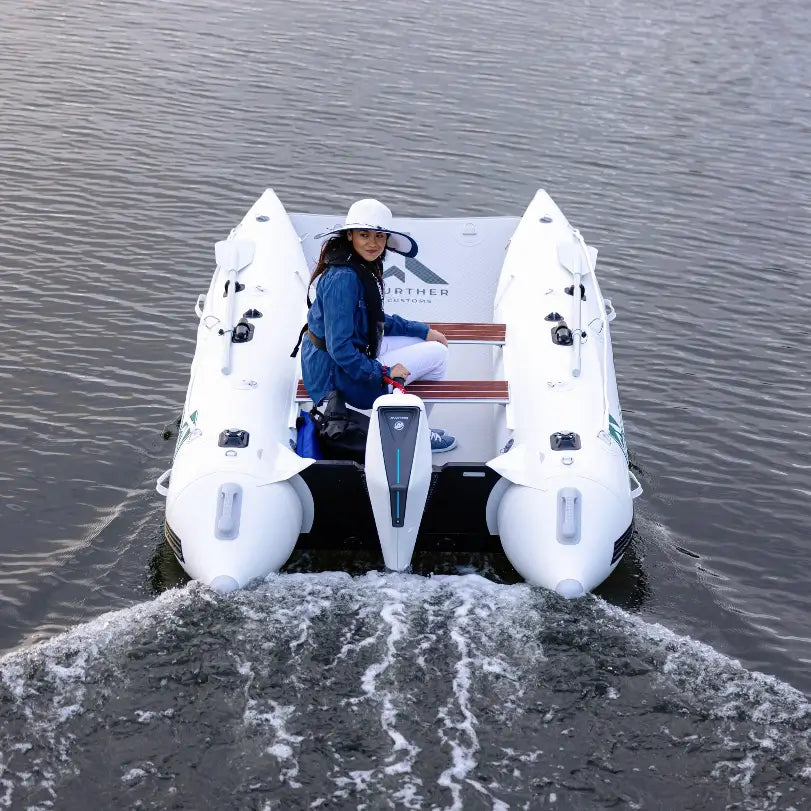
How fast an inflatable catamaran can go depends on its hull design, size, weight, passenger load, water conditions, and the outboard powering it. With an electric outboard 500w to 1,500w, most small inflatable catamarans will cruise at approximately 4–7 mph, while more powerful electric motors can push speeds higher. Pair the same lightweight hull with a properly sized gas outboard and speeds can exceed 20 mph. The twin-hull design plays an important role in that performance. Instead of pushing a broad hull through the water, an inflatable catamaran rides on two relatively narrow tubes with an open area between them. Combined with lightweight construction, this reduces resistance and allows a properly powered catamaran to transition onto plane efficiently. For example, our Laguna 330 inflatable catamaran can reach approximately 24 mph with a 15 HP gas outboard under favorable conditions. A 6 HP gas outboard can be sufficient to plane with a light, single-person load, while an 8–9.9 HP outboard is a better choice for riders who want to plane more consistently with passengers or gear.
How Fast Is an Inflatable Catamaran With an Electric Outboard?
Electric outboards are ideal for quiet cruising, harbor use, fishing, and ship-to-shore transportation. Smaller electric motors in the 1–3 HP equivalent range will generally propel an inflatable catamaran at displacement speeds of approximately 4–6 mph. More powerful electric outboards in the 4–6 HP equivalent range can push a lightweight catamaran into the 6–12 mph range, depending heavily on the motor, hull, passenger load, and conditions. At displacement speeds, the hull is still moving through the water rather than riding on top of it. As speed increases, the boat eventually reaches a point where significantly more power is needed to lift the hull and transition onto plane. During this transition, adding more power may initially produce a relatively small increase in speed. Once the boat climbs over its bow wave and begins to plane, drag decreases and additional power can produce a much greater increase in speed. This transition is particularly important when choosing an electric outboard. A motor may have plenty of power to move the boat efficiently at 5 or 6 mph but not enough power to push it through the higher-drag transition and onto plane.
Can an Electric Outboard Get an Inflatable Catamaran on Plane?
Yes, but it requires a sufficiently powerful electric outboard and a lightweight load. Most portable electric outboards are designed primarily for efficient displacement-speed cruising rather than planing.
Higher-output electric motors can generate enough thrust to push a lightweight inflatable catamaran through the transition and onto plane. During our testing of the Laguna with a 2 kW electric outboard, we reached approximately 7.4 mph. Increasing output to 3 kW boosted speed to approximately 12.1 mph, demonstrating how dramatically performance can change once enough power is available to overcome the transition between displacement and planing speeds.
For boaters who primarily want quiet, efficient cruising, a portable electric outboard is an excellent match. You can compare our electric outboard options from ePropulsion, Torqeedo, Mercury and Remigo to find the right balance of power, range, weight and portability for your boat.
If regularly getting onto plane and traveling at 15–20+ mph is the priority, a gas outboard in the 8–15 HP range remains the more practical option for most portable inflatable catamarans.
Ultimately, maximum speed is only part of the equation. Matching the outboard to the boat, passenger load, desired range, and intended use will provide the best combination of speed, efficiency, portability, and handling.