Choosing the right outboard motor for an inflatable catamaran, inflatable tender, or dinghy comes down to three questions: How fast do you want to go, how far do you want to travel, and how much engine weight are you comfortable carrying?
Both gas and electric outboard motors can be excellent choices for inflatable boats. The best motor depends on how you plan to use your boat and whether you prioritize speed and range or quiet, lightweight, low-maintenance operation.
Gas vs. Electric Outboard Motors: Do You Need to Go Fast and Far?
This is the first question we recommend asking when choosing an engine for an inflatable catamaran, yacht tender, or inflatable dinghy.
If you want to get your inflatable boat on plane, travel longer distances quickly, carry multiple passengers, or regularly operate against wind and current, a gas outboard motor is usually the better choice.
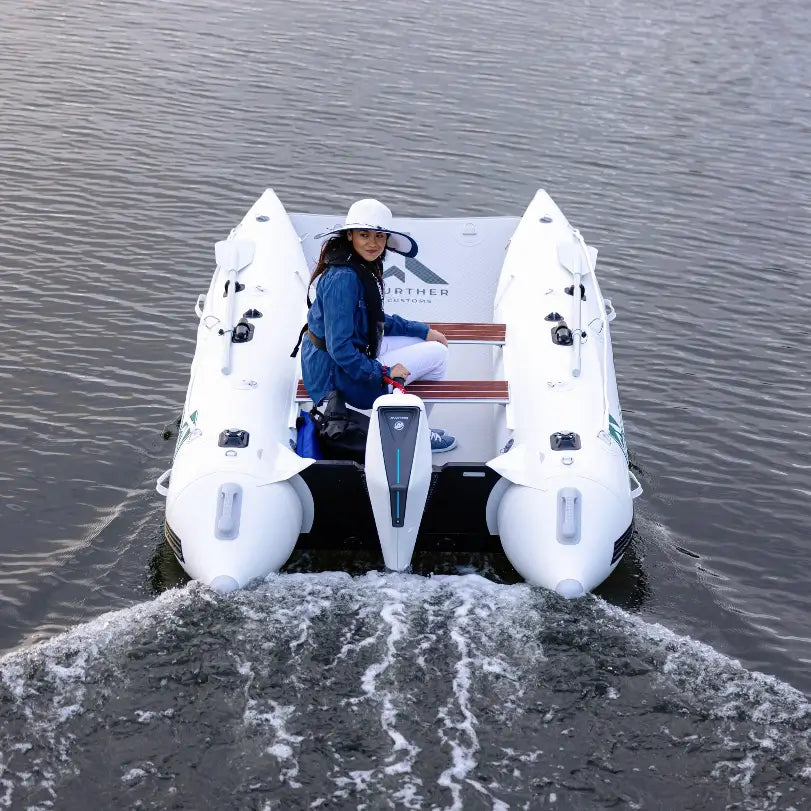
If you're not in a hurry and primarily plan to take shorter trips, cruise around a harbor, explore a lake, or travel between your yacht and shore, an electric outboard motor may be the better fit.
Modern electric outboards offer quiet operation, minimal maintenance, no gasoline or fumes, and excellent low-speed control. These advantages make electric propulsion particularly appealing for inflatable tenders and dinghies where convenience and portability are often more important than maximum speed.
How Much Horsepower Does Your Inflatable Boat Need?
If you've decided on a gas outboard, our general recommendation is simple:
Choose the largest outboard your inflatable boat is rated for that you feel comfortable lifting, transporting, and installing.
More horsepower generally makes it easier for an inflatable catamaran or dinghy to get on plane and maintain speed while carrying passengers, gear, or coolers. Additional horsepower can also be valuable when operating in coastal conditions, wind, waves, or current.
However, increasing horsepower can significantly increase engine weight.
Typical modern four-stroke gas outboards weigh approximately:
- 6 HP: 50–60 lbs
- 8 HP: 84–92 lbs
- 9.9 HP: 84–97 lbs
- 15 HP: 95–111 lbs
Exact weight varies by manufacturer, shaft length, and configuration.
For many owners of portable inflatable boats and catamarans, 6 HP represents an attractive balance between performance and portability. Moving to an 8 or 9.9 HP outboard can add roughly 30 pounds, while a 15 HP engine can weigh more than 100 pounds.
That difference becomes very noticeable when lifting the engine from your vehicle, carrying it down a dock or beach, or mounting it to your inflatable boat's transom.
When Should You Choose an Electric Outboard Motor?
If maximum speed isn't important, an electric outboard motor for your inflatable boat can be an excellent alternative to gas.
Electric outboards are especially well suited for:
- Inflatable yacht tenders and dinghies
- Inflatable catamarans
- Short trips between a yacht and shore
- Lakes, harbors and protected waterways
- Fishing and quiet cruising
- RV and overland adventures
- Boaters who don't want to transport gasoline
Instead of focusing exclusively on horsepower, selecting an electric outboard is more about finding the right combination of battery capacity, range, cruising speed, motor power, and total weight.
For short recreational trips where you're in no hurry, a smaller electric outboard can provide plenty of propulsion while keeping your inflatable boat lightweight, quiet, and easy to operate.
Electric Outboards for Yacht Tenders and Dinghies
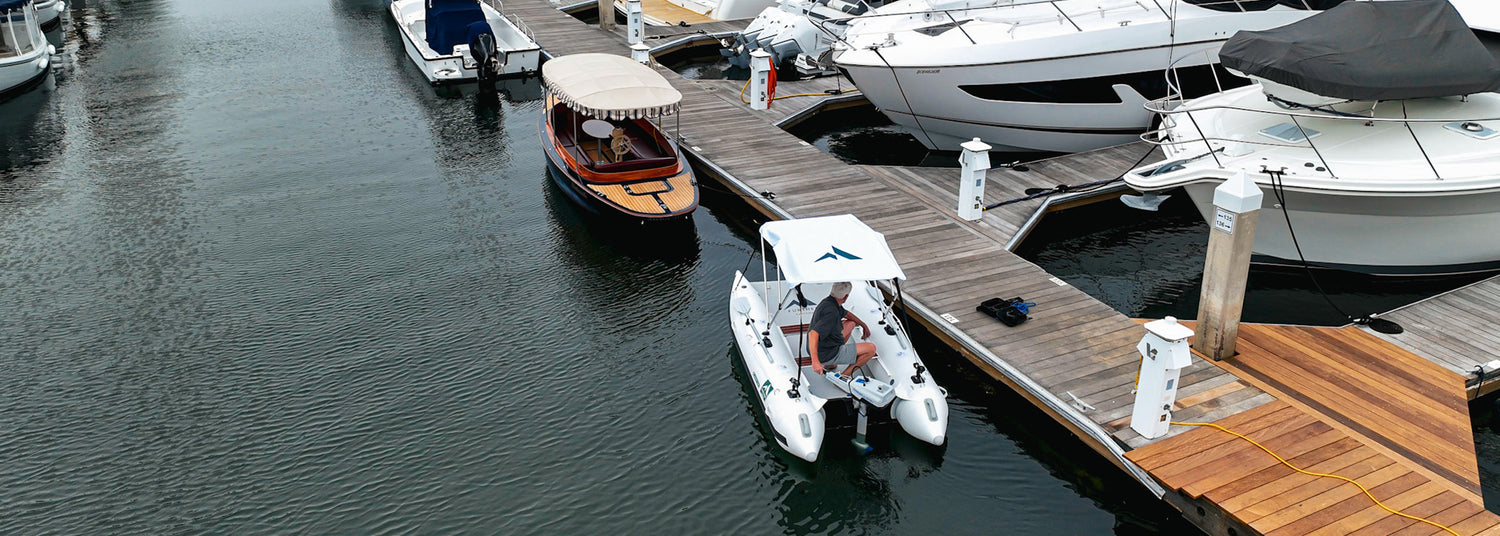
Electric propulsion is particularly appealing for inflatable yacht tenders.
Tender trips are often relatively short. You may only need to travel from an anchored yacht to a marina, beach, restaurant, or nearby dock. In these situations, the additional speed and range of a larger gas outboard may provide little practical benefit.
An electric outboard eliminates the need to transport and store gasoline aboard your yacht while offering quiet operation and simple starting. Many modern electric outboard motors also feature integrated or removable batteries, making them convenient for portable inflatable tenders and dinghies.
Gas Outboards for Inflatable Catamarans
If performance is the priority, a gas engine is often the preferred choice for a larger inflatable catamaran.
Inflatable catamarans can benefit significantly from additional horsepower because sufficient power allows the boat to climb onto plane rather than remaining at displacement speeds.
If you regularly carry multiple passengers or want to explore farther from your launch point, the additional speed and range provided by a larger gas outboard can make a substantial difference.
Just remember that additional horsepower generally means additional weight.
Think About Your Typical Trip
Imagine how you'll actually use your inflatable boat most often.
If you're launching your inflatable catamaran from a beach and want to travel several miles down the coast quickly, you'll probably appreciate the speed and range of a larger gas outboard.
If you're leaving your yacht and traveling half a mile through the harbor in your inflatable tender or dinghy, carrying a heavy gas engine and fuel tank may be unnecessary. A lightweight electric outboard could make the entire experience easier.
The same applies to lakes, rivers, campgrounds, and RV travel. If you're primarily taking short recreational trips and aren't concerned about getting on plane, electric propulsion can be an excellent choice.
Don't Buy More Outboard Than You'll Enjoy Carrying
Engine weight matters tremendously when selecting an outboard motor for a portable inflatable boat.
Consider where you'll store the motor, how you'll transport it, how far you'll need to carry it, and whether you'll regularly install and remove it yourself.
A larger outboard might deliver better performance on the water, but if it's too heavy or cumbersome to comfortably handle, it can take away one of the biggest advantages of owning an inflatable catamaran, tender, or dinghy: portability.
Which Outboard Motor Is Right for Your Inflatable Boat?
The answer can be surprisingly simple.
Want to go fast, travel farther, carry multiple passengers, or get your inflatable boat on plane?
Choose a gas outboard. Within your boat's horsepower rating, we generally recommend selecting the largest engine you feel comfortable lifting, transporting, and installing.
Taking shorter trips and happy to slow down and enjoy the ride?
Consider an electric outboard motor. For inflatable tenders, dinghies, catamarans, and other portable boats used for relaxed cruising, electric propulsion provides a quiet, clean, convenient alternative to gasoline.
Ultimately, the best outboard motor for an inflatable catamaran, tender, or dinghy isn't necessarily the most powerful one.
It's the motor that provides the speed, range, and performance you need without making your portable boat harder to transport and enjoy.