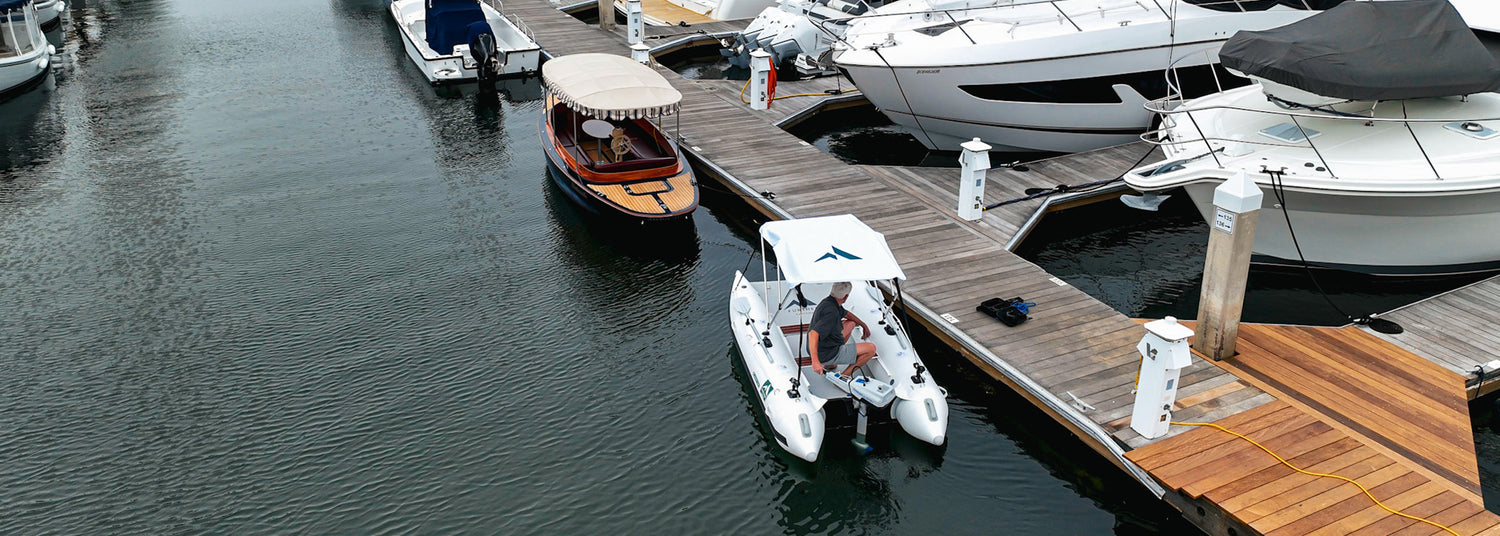
An inflatable dinghy is a small, air-filled boat typically used as a yacht tender, a lake or river runabout, or a lightweight backup boat — and the right one for you depends mostly on three things: how many people it needs to carry, what floor type you want, and how you plan to store and transport it. Prices generally range from a few hundred dollars for a basic roll-up model to several thousand for a high-pressure, catamaran-style tender with a rigid floor and outboard capability.
Here's how to size one correctly and what to expect at each price point.
What Is an Inflatable Dinghy?
"Dinghy" is a broad term for a small boat, and an inflatable dinghy is simply that boat built from air-filled tubes instead of a rigid hull. Most are used as tenders — the small boat that ferries people and gear between a larger yacht and shore — but plenty are also used on their own for lakes, rivers, and calm coastal water.
The terms "dinghy," "tender," and "inflatable boat" get used somewhat interchangeably, but a dinghy specifically implies something small and simple, generally under 12 feet, rather than a larger multi-purpose inflatable.
Types of Inflatable Dinghies
Not all inflatable dinghies are built the same way, and the type has a bigger impact on performance and price than most first-time buyers expect.
- Roll-up (soft floor) dinghies — the most basic and affordable type. The floor is flexible fabric or thin slats, and the whole boat rolls up small for storage. Great for portability, but flexes noticeably underway and isn't well suited to larger outboards.
- Air-floor dinghies — use a high-pressure inflatable floor (often drop-stitch construction) instead of a soft or slatted one. This gives a much more rigid ride while still packing down reasonably small, making it a popular middle-ground option.
- Slatted or hard-floor dinghies — use rigid wood or aluminum floor panels connected by hinges. More rigid than roll-up models, but bulkier to store and typically heavier.
- RIB (rigid inflatable boat) dinghies — combine a solid fiberglass hull bottom with inflatable tubes around the sides. Very stable and capable of higher-horsepower engines, but they don't fully deflate for storage the way other types do.
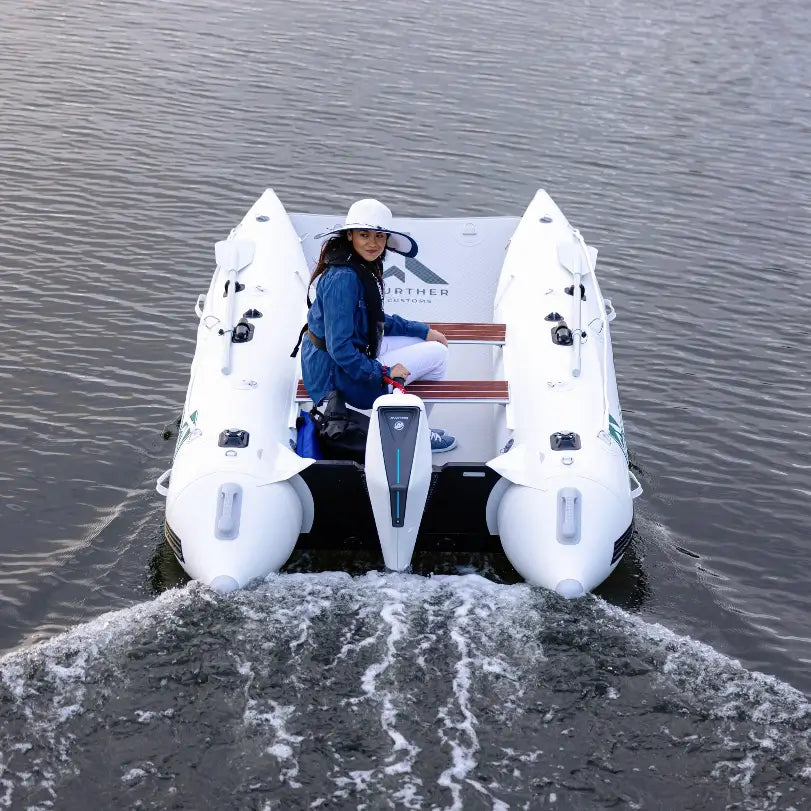
- Inflatable catamaran-style dinghies — use two separate inflatable hulls (pontoons) instead of one central tube shape, which generally improves stability and dryness in chop compared to a single-tube design, while still packing down for storage. Further Customs' Laguna inflatable catamaran is built on this same two-hull design.
Sizing Guide
Sizing an inflatable dinghy comes down to two questions: how many people and how much gear needs to fit, and how much horsepower you want to run.
|
Length |
Typical Capacity |
Best For |
|
7-8 ft |
2 people |
Solo or couple use, minimal gear, easiest to store |
|
9-10 ft |
3-4 people |
Small families, day trips, moderate gear |
|
11-12 ft |
4-5 people |
Families or small groups, more stable ride, higher HP capable |
|
13+ ft |
5+ people |
Larger groups, extended trips, closer to a full runabout than a tender |
As a general rule, sizing up one size from your typical group size gives more comfortable freeboard and stability, rather than sizing exactly to your usual headcount.
How Much Do Inflatable Dinghies Cost?
Pricing varies significantly by type, size, and construction quality, but as a general guide:
|
Type |
Typical Price Range |
|
Basic roll-up, soft floor |
$300 - $900 |
|
Air-floor (drop-stitch) |
$800 - $2,500 |
|
Slatted/hard-floor |
$1,200 - $3,000 |
|
RIB dinghy |
$2,500 - $8,000+ |
|
Premium catamaran-style tender (with outboard package) |
$3,000 - $6,000+ |
These ranges reflect the boat itself; outboard engines, seating upgrades, canopies, and accessories are typically priced separately and can add meaningfully to the total cost, especially for electric outboard packages.
What to Look For When Buying
- Material — PVC is the most common and budget-friendly option; Hypalon/CSM fabric costs more but generally resists UV and abrasion better over the long term.
- Floor type — directly affects ride quality, stability, and how easily the dinghy fits an outboard motor.
- Weight capacity — check both passenger count and total weight limit, since gear and coolers count against it too.
- Max horsepower rating — determines what size outboard (gas or electric) you can legally and safely run.
- Portability — how it packs down, how heavy it is dry, and whether one or two people can realistically carry and transport it.
- Seam construction — thermal-welded seams generally outlast glued seams, especially with regular saltwater and UV exposure.
Inflatable Dinghy vs. Traditional Dinghy vs. RIB
|
|
Inflatable Dinghy |
Hard-Hull Dinghy |
RIB |
|
Portability |
Excellent — deflates for storage |
Poor — needs davits or a trailer |
Moderate — doesn't deflate |
|
Stability |
Good, varies by floor/hull type |
Good |
Very good |
|
Weight |
Lightest option |
Heaviest |
Moderate |
|
Cost |
Lowest to mid-range |
Mid to high |
Highest |
|
Best for |
Yacht tenders, lake/river use, easy storage |
Owners with dedicated storage/davits |
Higher-speed use, rougher water |
Choosing the right inflatable dinghy comes down to matching the type, size, and floor construction to how you'll actually use it — not just the lowest price tag. At Further Customs, we build our inflatable dinghies and tenders around exactly the priorities covered in this guide: real stability, real portability, and construction that holds up season after season. Whatever size or type you land on, take the time to get the sizing and floor construction right before you buy — it's the difference between a dinghy you use every trip and one that sits deflated in the garage.
FAQ
How long does an inflatable dinghy last?
With proper care — rinsing off salt water, storing out of direct sun when possible, and avoiding sharp-object contact — a quality inflatable dinghy can reasonably last many years, though soft-floor budget models tend to wear faster than air-floor or catamaran-style construction.
Can an inflatable dinghy handle rough water?
It depends heavily on the design. Single-tube roll-up models are best suited to calm, protected water, while catamaran-style hulls and RIBs generally handle chop and light waves much better.
Do inflatable dinghies need to be registered?
In most U.S. states, yes, if it has a motor — registration requirements are typically based on horsepower and hull identification, not the fact that it's inflatable.
What's the difference between a dinghy and a tender?
They're largely the same type of boat; "tender" specifically emphasizes its role servicing a larger yacht, while "dinghy" is the more general term for any small boat.
Is an air-floor dinghy worth the extra cost over a roll-up model?
For most regular users, yes — the rigidity makes a noticeable difference in ride quality and stability, especially once an outboard motor is added.