Who really invented inflatable swim platforms and how did they first come to life?
Inflatable docks and swim platforms feel like a modern invention. They are often associated with paddleboards, sandbar gatherings, and the growing lifestyle around boating.
The reality is more nuanced.
The earliest online record of an inflatable dock appears to come from Lancer Industries, which introduced the Airodock inflatable floating dock to New Zealand as early as 2009. Though the inflatable dock was not invented by a single person or company. Instead, it evolved over decades through advancements in aerospace, military engineering, whitewater rafting, and eventually luxury yachting.
To understand where inflatable docks truly come from, it helps to start much earlier than most would expect.
The Foundation: Aerospace Innovation in the 1950s
The story begins in the early 1950s with the development of drop-stitch fabric.
Originally created by Goodyear, this material connects two fabric layers with thousands of internal threads. When inflated to high pressure, the structure becomes rigid while remaining lightweight.
This technology was not designed for recreation. Its early applications included:
- Inflatable aircraft
- Military structures
- Deployable aviation concepts
Experimental inflatable airplanes were even built and flown using this construction.
The core principle was simple: air could replace traditional structure without sacrificing rigidity. This same principle remains at the heart of every inflatable dock today.

From Concept to Function: Military and Early Marine Use (1960s to 1990s)
Between the 1960s and 1990s, organizations like the U.S. Navy explored inflatable structures for practical use.
These included:
- Temporary floating platforms
- Work surfaces on water
- Transportable structures
While not designed as recreational swim platforms, these applications proved a critical point:
A high-pressure inflatable surface could be stable, durable, and walkable.
This was the key transition from experimental material to functional marine application.
The turning point: whitewater raft floors (1980s to 1990s)
By the 1980s and 1990s, companies such as NRS and AIRE began using drop-stitch construction in raft floors.
This marked the first widespread use of the technology in real-world marine environments.
For the first time, users could:
- Stand confidently on an inflatable surface
- Rely on consistent rigidity under load
- Use the material in demanding conditions like rivers and rapids
These raft floors are widely considered the direct predecessors of modern inflatable docks.

The Modern Inflatable Dock Emerges (2010s)
Inflatable docks as we recognize them today began to take shape in the early 2010s.
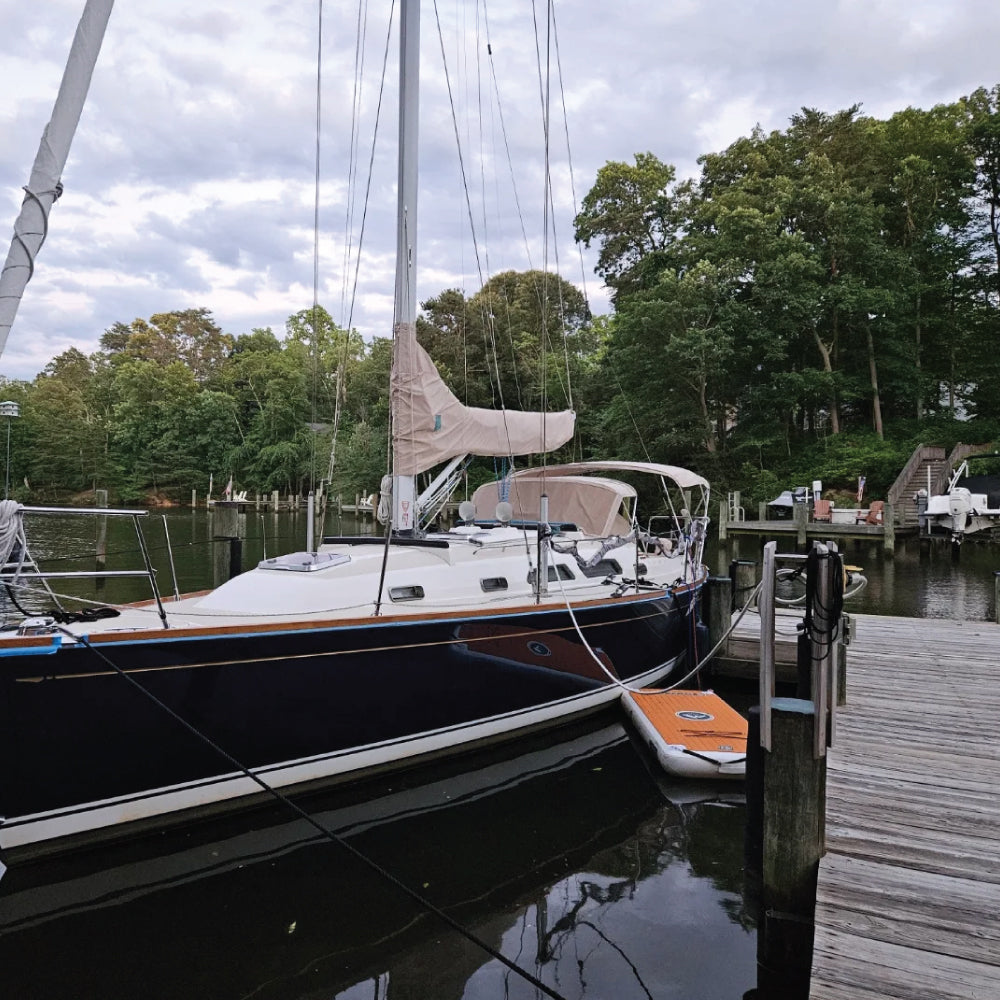
As early as 2009 Lancer industries introduced the Airodock inflatable floating dock to New Zealand. Though it was largely popularized in the UK and US markets Nautibuoy Marine. Nautibuoy designs focused on modular, yacht-based platforms intended to expand usable space on the water. Although other companies may claim to have invented the dock, clear evidence shows that Nautibuoy was the first brand to introduce the floating dock with faux-teak aesthetic into the US market as early as 2016 at the Fort Lauderdale International Boat Show.
These platforms were designed for:
- Boarding
- Lounging
- Social use
Around the same time, brands such as BOTE and Solstice Watersports helped introduce inflatable docks to a broader recreational audience.
This period marked the transition from niche marine equipment to a widely adopted lifestyle product.

So who really invented the inflatable dock?
There is no single inventor.
Instead, the inflatable dock emerged through a sequence of developments:
- Aerospace innovation in the 1950s made rigid inflatable structures possible
- Marine and rafting applications in the 1980s and 1990s proved they were practical and durable
- Yacht and recreational brands in the 2010s refined them into platforms designed for leisure
Modern inflatable docks are the result of this layered evolution.
A Modern Perspective
While the underlying technology is more than 70 years old, inflatable docks in their current form are relatively new.
This makes the category dynamic and still evolving.
Advancements in materials, construction methods, and design have significantly improved performance, durability, and user experience. Features such as welded seams, higher-pressure tolerances, and refined layouts have elevated what these platforms can offer.
At its core, however, the concept remains unchanged:
Air, when engineered correctly, can serve as structure.

The Takeaway
Although the Inflatable docks and platforms we think of now were first introduced in the early 2010's by brands like Nautibuoy, Bote, Paddle North or Solstice they were not invented in a single moment or brand. They developed over time through contributions from multiple industries.
From experimental aircraft to whitewater raft floors to modern yacht platforms, each phase built upon the last.
Understanding this progression highlights what inflatable docks truly represent: a refined application of decades of engineering, designed to create simple, portable, and reliable space on the water.
Continuing the Evolution

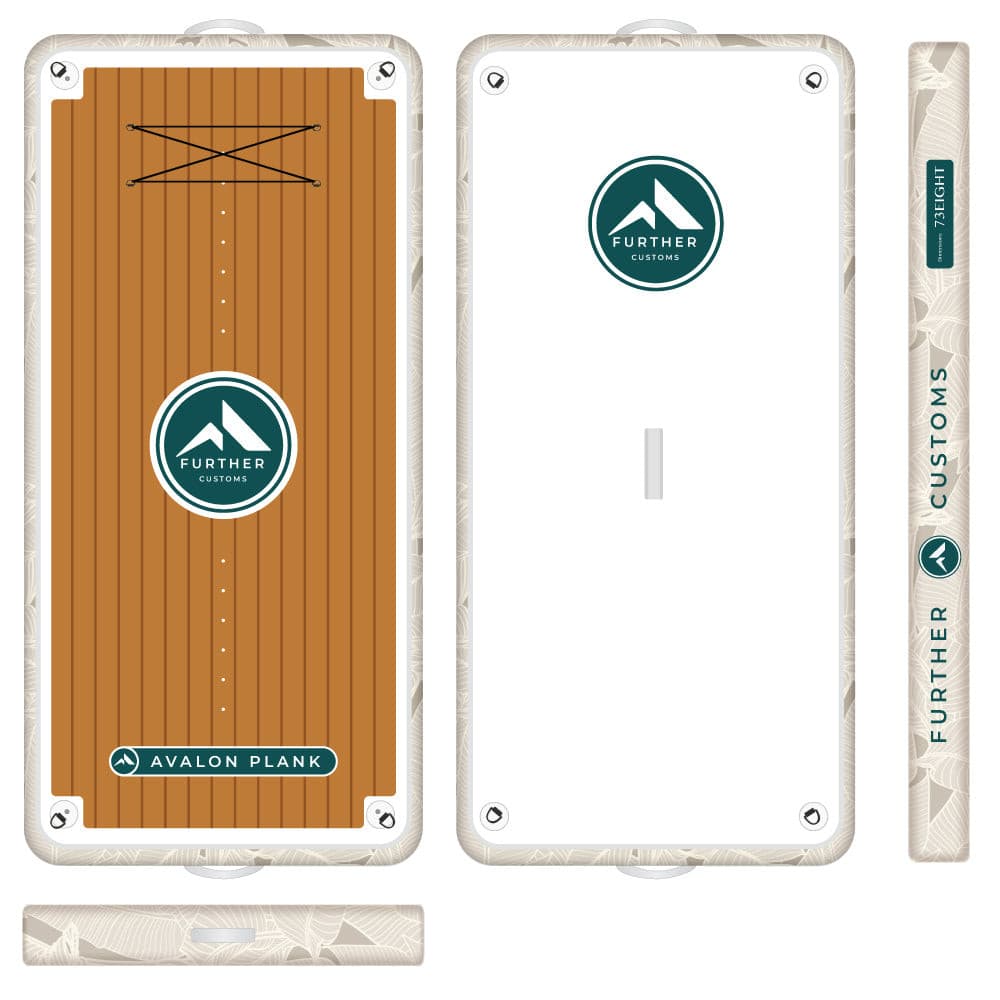
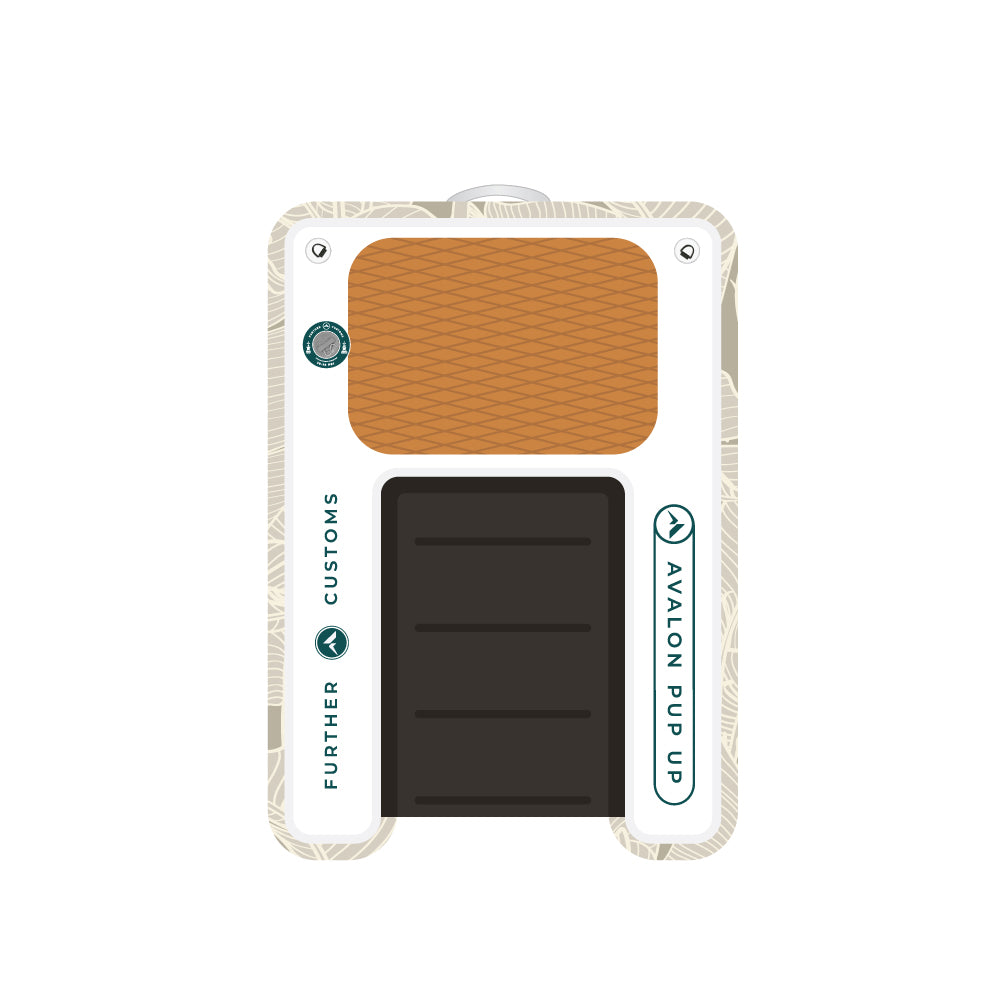
Further Customs is not the first company to manufacture inflatable docks or floating swim platforms. The category itself is built on decades of innovation that began long before it reached the modern marine market.
Where Further Customs differentiates itself is in how that foundation is carried forward.
Through the use of premium materials, advanced construction methods, and a focus on thoughtful design, each product is built to elevate performance, durability, and overall experience. The goal is not simply to participate in the category, but to refine it. By continuously improving how inflatable docks, boat extensions, and yacht platforms are designed and used, Further Customs contributes to the ongoing evolution of these products while delivering a more enjoyable experience on the water.