Ultra Stable Inflatable Tenders
A Premium Inflatable Dinghy Built for Yachts, Sailboats & Life on the Water
The Laguna Inflatable Catamaran is a lightweight, portable inflatable boat tender designed for yacht owners, sailors, cruisers, and anyone looking for a more capable alternative to a traditional inflatable dinghy. Its catamaran-style hull, rigid drop-stitch floor, and durable thermal-welded construction deliver exceptional stability, shallow-water capability, and efficient performance with electric or gas outboard motors. Available in 9'5" and 11' models, the Laguna packs down for easy transport and storage while offering the space and versatility of a much larger tender. Whether you're shuttling from yacht to shore, exploring a harbor, cruising the coast, or heading out for the day, the Laguna combines the portability of an inflatable tender with the performance and stability of an inflatable catamaran.
Filters
1 product
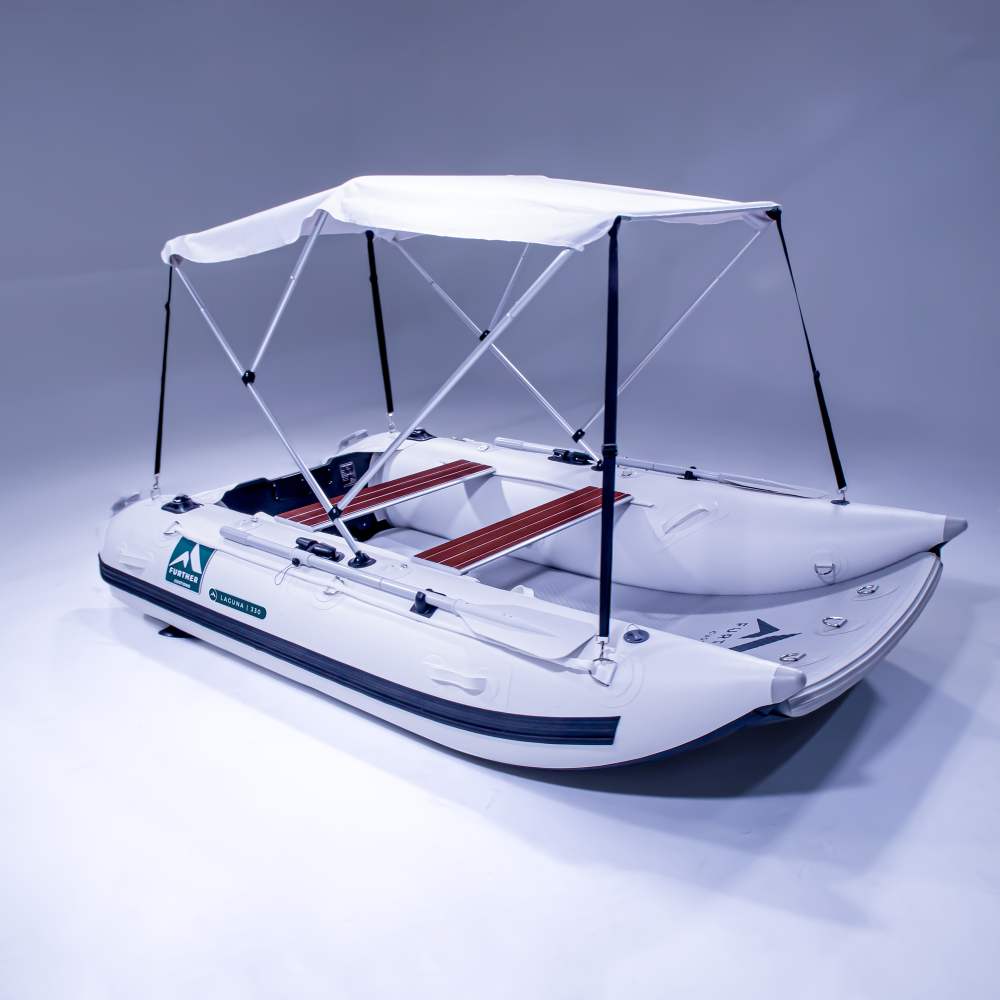


Its wide, open bow provides an easy entry point for boarding from the water, beach, or swim platform, while the rigid drop-stitch floor delivers confident footing as you step aboard. A spacious catamaran design adds stability for passengers, pets, and gear, whether you’re heading ashore or returning to the boat.
Stable, lightweight, and easy to maneuver from yacht to shore.
Nimble, Responsive & Ready to Cruise
The Laguna combines the stability of a catamaran with the nimble, responsive handling you want from an inflatable tender. Its lightweight design is easy to maneuver around docks and anchorages, while the spacious interior comfortably carries passengers and gear.
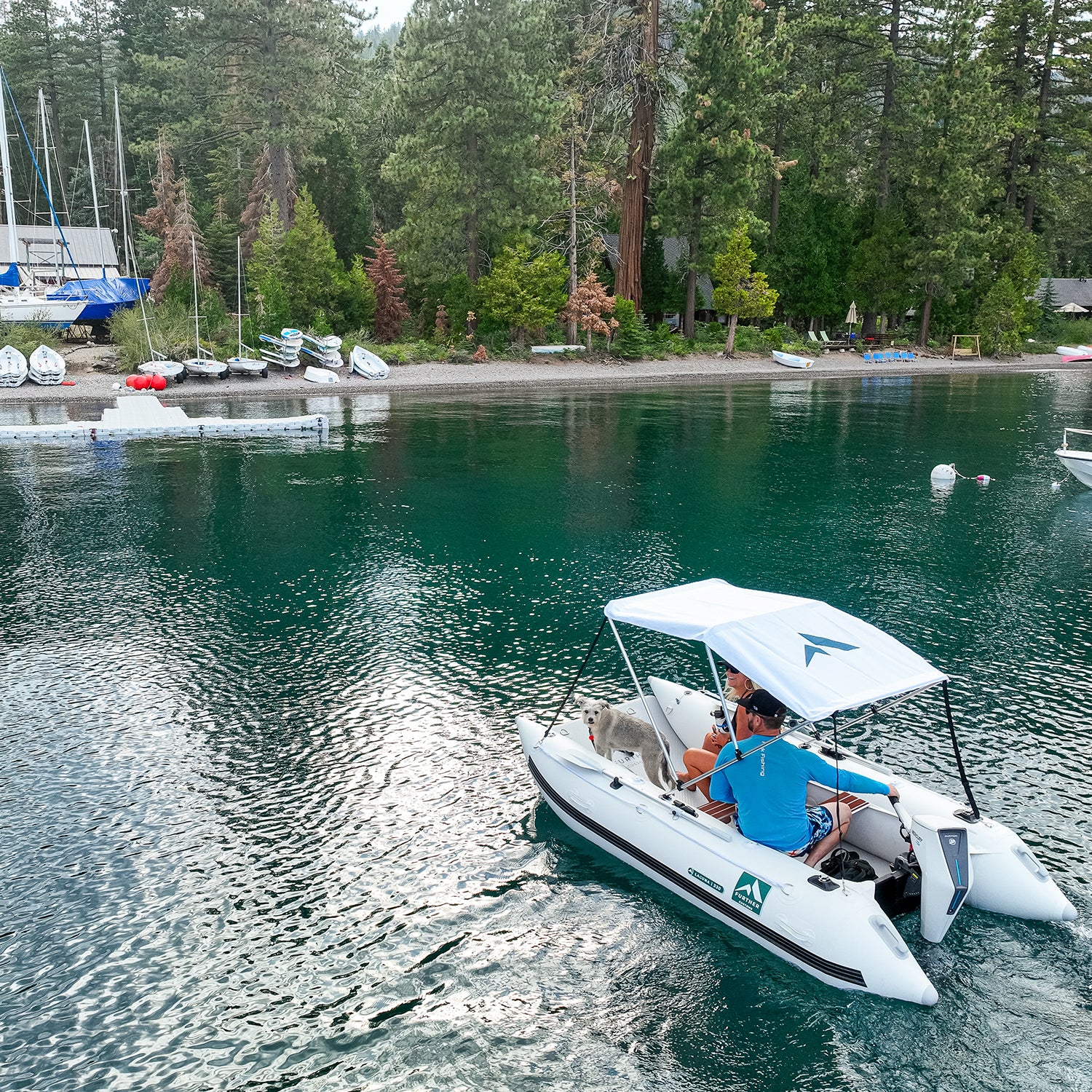
Transport Passengers, Pets & Gear with Confidence
Built for Ship-to-Shore Trips
Makes hauling easy, with an open bow for convenient boarding and a rigid, stable floor for passengers, pets, coolers, and gear.
What You Should Know About Inflatable Boat Tenders and Helpful Recommendations
Frequently Asked Questions
Choosing the right inflatable tender comes down to how and where you plan to use it. Explore answers to common questions about inflatable boat tenders, inflatable dinghies, yacht tenders, catamaran designs, outboard motor sizing, durability, storage, performance, and more to help you find the right tender for your boat and time on the water.
What is an inflatable boat tender?
An inflatable boat tender is a compact inflatable vessel used to transport passengers, pets, and gear between a larger boat and shore. Inflatable tenders are popular with yacht and sailboat owners because they are lightweight, portable, easy to store, and can be powered by either gas or electric outboard motors.
What is the difference between an inflatable tender, dinghy, and inflatable boat?
The main difference is purpose rather than construction. A tender is a small boat specifically used to support a larger yacht or sailboat by transporting passengers, supplies, and gear between the vessel and shore. A dinghy is a broader term for a small boat that may be used independently or as a tender, while an inflatable boat is simply defined by its inflatable construction. Many inflatable dinghies serve as tenders, but not every inflatable boat is designed specifically for tender use.
What makes a good inflatable boat tender?
A good inflatable boat tender should balance stability, durability, portability, passenger and gear capacity, and outboard performance. It should comfortably accommodate your intended passengers and equipment while supporting an outboard with enough power to achieve your desired speed. Features such as welded seams, a rigid inflatable floor, large-diameter tubes, multiple air chambers, comfortable seating, and optional features make a significant difference in performance, durability, and everyday use.
What is an inflatable catamaran tender?
An inflatable catamaran tender uses two separate inflatable hulls or tubes with an open or elevated bow rather than the conventional V-shaped design of many inflatable dinghies. The twin-hull configuration provides excellent stability, a spacious interior, shallow draft, and efficient outboard performance. For boaters, this means a steady platform for boarding and moving around, more usable space for passengers and gear, and easier access to beaches, docks, and shallow water.
The Laguna Inflatable Catamaran pairs this open catamaran design with a rigid drop-stitch floor, creating a portable yacht tender that is easy to board, load, transport, and store while offering the stability and capability needed for coastal exploration and everyday use.
Is an inflatable catamaran a good yacht tender?
The Laguna’s generous floor space offers ample room for extra passengers, coolers, and gear, while its wide, open bow design allows for safe and convenient entry and exit at shorelines. This layout makes boarding, beach landings, and gear management far easier than with traditional tender designs. The spacious bow area also provides a comfortable place to stretch out and relax, with the upward slope of the bow naturally supporting the head and shoulders—similar to the reclined position of a chaise lounge chair.
Is an inflatable catamaran a good yacht tender?
Yes. An inflatable catamaran is especially well suited as a yacht tender because it can deliver the utility of a conventional tender without requiring permanent onboard storage or a trailer. It can be deflated and packed away when not in use, launched relatively easily, and paired with a lightweight gas or electric outboard for ship-to-shore transportation. Inflatable construction also creates a soft exterior around much of the boat, making contact with swim platforms, docks, and the mothership more forgiving during boarding and maneuvering.
What size inflatable tender do I need?
The best inflatable tender size depends on passenger count, available storage space, outboard size, and how you plan to use the boat.
The Laguna 290 measures 9'5" and is a compact option for boaters prioritizing portability and storage. The Laguna 330 measures 11' and provides additional interior room, passenger capacity, and compatibility with more powerful outboards.
For yacht tender applications, it is also important to measure and consider the available deck, davit, swim platform, or storage area before choosing a size.
What size outboard motor do I need for an inflatable tender?
Outboard size depends on the tender’s dimensions, weight, passenger load, and desired performance. For many small inflatable tenders, a 1–6 HP outboard is a practical choice when portability and ease of handling are the priority. These lighter motors are easier for one person to carry, mount, remove, and store, making them well suited for harbor cruising, short yacht-to-shore trips, and tenders that are frequently launched and retrieved.
For small inflatable tenders like the Laguna 290 and Laguna 330, boaters who prioritize getting on plane should consider a 9.9 HP or larger outboard, provided they are comfortable managing the additional engine weight. The Laguna 290 is rated for up to 10 HP, making a 9.9 HP outboard a strong choice for maximizing its planing performance. The larger Laguna 330 is rated for up to 15 HP, providing additional power for carrying multiple passengers, fuel, and gear while making it easier to get the tender on plane.
The primary tradeoff with these larger outboards is portability. A 9.9–15 HP gas motor is considerably heavier and more cumbersome to lift, mount, and store than a smaller portable outboard. If the motor will typically remain mounted, or a davit or lifting system is available, taking advantage of the Laguna’s higher horsepower capacity can provide a faster, more capable tender for longer shore runs and coastal exploration. For boaters who expect to frequently remove and carry the motor by hand, a smaller outboard may be the more practical choice.
Can you use an electric outboard on an inflatable tender?
Yes, electric outboard motors are particularly well suited to inflatable tenders used for yacht-to-shore transportation, harbor cruising, lakes, marinas, and short recreational trips. They offer quiet operation, low maintenance, no gasoline storage, and easy starting.
The Laguna can be paired with a range of portable electric outboards depending on the desired speed and range.
Can an inflatable tender get on plane?
Yes, many inflatable boat tenders can plane when paired with sufficient horsepower and an appropriate passenger load. Hull design, boat length, weight distribution, outboard height, propeller selection, and water conditions all influence planing performance.
The Laguna's inflatable catamaran design is intended to provide efficient performance with both electric and gas outboards. We recommend at least 6 hp, but ideally 8 hp or more, to help the boat get on plane when conditions, passenger load, and weight distribution are suitable.
How fast can an inflatable tender go?
Our Laguna Inflatable Catamaran can reach speeds in excess of 24 mph with a 15 HP outboard under the right conditions. Actual speed will vary based on the tender size, motor, passenger and gear load, propeller, weight distribution, wind, current, and water conditions.
Smaller electric outboards are generally best suited for efficient displacement-speed cruising, while appropriately sized gas outboards can provide enough power to get a compatible inflatable tender on plane and achieve significantly higher speeds. Always stay within the manufacturer’s horsepower rating and operate at a speed appropriate for the conditions.
Are inflatable tenders stable?
Inflatable tenders are naturally stable thanks to their large, buoyant tubes and wide footprint on the water. Catamaran-style inflatable tenders take that stability a step further by spreading buoyancy across two separate hulls, creating a wide and confidence-inspiring platform.
That extra stability comes in handy when climbing aboard from a yacht, moving between seats, loading up the cooler, bringing the dog along, or simply enjoying a little more freedom to move around without feeling like everyone needs to sit perfectly still.
What is a drop-stitch floor on an inflatable tender?
A drop-stitch floor uses thousands of internal fibers to connect its upper and lower surfaces. When inflated to high pressure, these fibers allow the floor to become remarkably rigid, giving you the solid feel of a rigid floor while remaining significantly lighter in weight.
The result is a firm walking surface that is more forgiving on impact than traditional fiberglass, aluminum, or wood floors. Because it deflates and rolls up, a drop-stitch floor is also easy to pack, transport, and store.
Is a drop-stitch floor better than an inflatable air floor?
Drop-stitch is a type of high-pressure inflatable floor construction. Compared with basic low-pressure inflatable floors, drop-stitch construction can provide substantially greater rigidity and a more solid surface underfoot.
It is especially useful for portable tenders where boaters want rigidity without the weight and storage requirements of removable hard floor panels.
What is the difference between an inflatable tender and a RIB?
A RIB, or rigid inflatable boat, combines inflatable tubes with a permanent rigid hull, usually made from fiberglass or aluminum. A fully inflatable tender replaces that rigid hull with inflatable construction.
RIBs can offer excellent high-speed performance but are typically heavier and require considerably more storage space. Fully inflatable tenders prioritize portability and can often be deflated, packed, and transported when not in use.
Is an inflatable tender easier to store than a RIB?
Generally, yes. A fully inflatable tender can be deflated and packed into a much smaller space, while a RIB retains its full hull dimensions even when its tubes are deflated.
For boaters with limited deck, garage, vehicle, or seasonal storage space, packability can be one of the biggest advantages of choosing an inflatable boat tender.
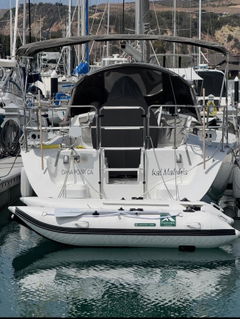
Can an inflatable tender be stored on a yacht?
Yes. Inflatable tenders can be stored on deck, on a swim platform, with an appropriate davit system, or deflated and packed away depending on the yacht and tender.
Always verify the yacht's available space and the capacity of any davits, cranes, platforms, or lifting equipment before selecting a tender.
Can an inflatable tender be lifted with davits?
Yes, many inflatable tenders can be lifted and stored using an appropriately rated davit or lifting system, allowing the tender to remain inflated, rigged, and ready for the next trip ashore. When planning a setup, consider the tender’s total weight, outboard weight, lifting-point locations, davit capacity, and weight distribution.
2026 and newer Laguna Inflatable Catamarans are designed with heavy-duty lifting points, including reinforced hull D-rings and stainless steel eye bolts pre-installed through the transom. These dedicated stern lifting points provide greater flexibility when creating a secure, balanced davit configuration, particularly when lifting the tender with an outboard attached.
Always lift from the designated heavy-duty points rather than smaller accessory or floor D-rings. The davit, lifting hardware, and rigging should be appropriately rated for the tender’s fully equipped weight, including the outboard, fuel or battery, and any gear remaining onboard.
Can I leave the outboard attached when lifting an inflatable tender?
Whether the motor can remain attached depends on the tender, lifting arrangement, motor weight, transom, and capacity of the davit system. Removing a portable outboard reduces the total suspended weight and can simplify storage.
Always calculate the complete wet and equipped weight of the tender rather than relying solely on the hull weight.
Are inflatable tenders good for shallow water?
Yes. Inflatable tenders typically have a shallow draft, making them well suited for navigating protected coves, sandbars, shorelines, and other areas where deeper-hulled boats may have difficulty. Inflatable catamaran designs can be particularly capable in shallow water because much of the hull rides at or near the surface, allowing boaters to explore closer to shore.
The limiting factor is often the outboard rather than the tender itself. The lower unit and propeller extend below the hull and require additional clearance, so reduce speed and trim or tilt the motor as conditions become shallower. Always keep an eye on changing depths and underwater obstacles.
Can you beach an inflatable tender?
Yes. Beaching is one of the practical advantages of a lightweight inflatable tender, especially for boaters who regularly travel between a yacht and shore. You can pull the tender onto suitable sand or shoreline instead of needing a dock, making it easier to explore beaches, stop for the day, or unload passengers and gear.
Portability becomes particularly valuable when the tide changes. If a falling tide leaves your tender farther up the beach than expected, a smaller inflatable can often be lifted, repositioned, or moved back toward the water rather than waiting for the tide to return. Transom wheels make this considerably easier, especially when an outboard remains attached.
Choose your landing area carefully and avoid dragging the hull across sharp rocks, coral, shells, or other abrasive surfaces. Whenever possible, carry or roll the tender rather than dragging it to help protect the underside from unnecessary wear.
How long does an inflatable tender last?
The lifespan of an inflatable tender depends heavily on construction quality, UV exposure, climate, frequency of use, storage, inflation pressure, and maintenance. Keeping the boat clean, protecting it from unnecessary UV exposure, maintaining proper inflation pressure, and storing it dry can significantly extend its useful life.
Laguna inflatable tenders are constructed from durable marine-grade PVC with thermal-welded seams for repeated use in demanding marine environments. The hull is backed by a 5-year warranty against UV damage, while the seams are covered for 3 years.
With proper care, owners can reasonably expect a Laguna to provide at least 5 years of service, with 10 years or more possible when well maintained. Limiting unnecessary UV exposure is one of the best ways to extend the life of any inflatable boat. Keeping your tender shaded or protected with a UV boat cover when not in use, rinsing it with fresh water after saltwater use, and storing it clean and dry can help maximize its lifespan.
Should I deflate my inflatable tender after every use?
Not necessarily. An inflatable tender can remain inflated during periods of regular use if it is properly stored and protected. However, air pressure changes with temperature, so inflation pressure should be monitored, particularly during hot weather or prolonged direct sunlight.
For long-term or seasonal storage, cleaning, drying, deflating, and properly packing the tender can help extend its life.
How do I store an inflatable tender?
Before long-term storage, rinse the tender with fresh water, allow it to dry completely, and remove sand, salt, and debris. It can then be deflated, loosely packed, and stored in a cool, dry environment away from prolonged sunlight, excessive heat, sharp objects, and chemicals.
Do inflatable tenders need to be registered?
Registration requirements depend on where the boat is operated and whether it is motorized. In many U.S. states, adding an outboard motor requires the tender to be registered even if the boat is inflatable.
Laguna inflatable catamarans include a Hull Identification Number (HIN) and can be registered in the United States. Owners should verify the specific requirements of their state or country.
Do inflatable tenders have Hull Identification Numbers?
Yes. Inflatable tenders intended to be registered as recreational vessels may include a Hull Identification Number (HIN), a unique 12-character identifier assigned to each boat and commonly used for vessel registration, titling, and ownership documentation.
On most boats, the HIN is located on the starboard side of the transom, or the right-hand side when looking forward from inside the boat. It is typically positioned toward the upper portion of the transom where it can be easily located for registration or inspection.
Every Laguna Inflatable Catamaran includes a HIN and is manufactured under a Manufacturer Identification Code (MIC) recognized by the U.S. Coast Guard. The MIC forms the first three characters of the HIN and identifies the vessel’s manufacturer, while the remaining characters uniquely identify the individual boat, its time of manufacturing and model year.
Where can I use an inflatable tender?
Inflatable tenders are versatile enough for saltwater and freshwater use, including lakes, rivers, harbors, bays, marinas, protected coastal waters, and yacht-to-shore trips. Their portability and shallow draft also make them a great option for exploring beaches, coves, sandbars, and other places larger boats may have difficulty reaching.
Always consider wind, waves, currents, water depth, local regulations, and the capabilities of your tender and outboard before heading out. After saltwater use, rinse the boat, outboard, hardware, and accessories with fresh water to help reduce salt buildup and corrosion and keep everything performing its best.
Can dogs ride in an inflatable tender?
Yes, inflatable tenders are dog friendly and can be a great choice for boating with your pup. Their wide tubes and stable platforms provide plenty of room to settle in comfortably, while the soft inflatable construction is more forgiving than many hard-sided boats.
Catamaran-style tenders with an open bow can make getting on and off the boat even easier. Dogs can step directly aboard from a beach, dock, or swim platform without having to climb over a tall enclosed bow, which is especially helpful for older, larger, or less agile pups.
How portable is an inflatable boat tender?
Portability is one of the biggest advantages of an inflatable boat tender. Unlike a rigid dinghy, the Laguna Inflatable Catamaran can be deflated, folded, and packed into compact or irregular storage spaces onboard, in a vehicle, or at home.
For even easier transport, the Laguna can be split between multiple bags, with the hull, removable floor, seats, canopy, oars, and accessories stored separately to reduce the size and weight of each load.
And because it doesn’t have to stay with the mothership, its use can extend well beyond traditional tender duty. Pack it into the car or RV for family vacations, road trips, camping weekends, lake days, and coastal adventures, giving you a capable boat that can travel wherever the next trip takes you.
What should I look for when buying an inflatable tender?
When comparing inflatable boat tenders, consider size, weight, passenger capacity, construction material, seam construction, floor rigidity, outboard horsepower rating, stability, storage dimensions, included accessories, customer reviews, warranty, and replacement-part availability.
You should also consider how you will actually use the tender. A lightweight electric-powered setup may be ideal for short yacht-to-shore trips, while boaters covering greater distances or wanting to plane may prefer a tender designed for a larger gas outboard.
What is the best inflatable tender for a yacht?
The best inflatable tender for a yacht depends on your available storage space, passenger capacity, lifting setup, desired speed, and how you plan to use it.
If you’re looking for an ultra-stable, lightweight, and packable yacht tender that can run with either electric or gas outboard motors, the Laguna Inflatable Catamaran is designed to check a lot of boxes. Its catamaran hull and rigid drop-stitch floor are paired with premium features including sliding bench seats, an adjustable sun canopy, integrated accessory mounts, rod holders, EVA traction, reinforced lifting points, and a wheeled storage bag. When the adventure is over, it can be deflated and packed away until you’re ready to head out again.
What is the best inflatable tender for an electric outboard?
A good inflatable tender for an electric outboard should be lightweight, efficient, stable, and easy to maneuver at displacement speeds. Keeping overall weight down helps make the most of available battery capacity and range, while a portable electric motor provides quiet operation, easy starting, and eliminates the need to carry gasoline onboard.
The Laguna Inflatable Catamaran is compatible with a range of compact electric outboards, making it a great option for quiet yacht-to-shore trips, harbor cruising, and recreational exploring. Depending on your priorities, you can choose a lightweight motor for maximum portability or step up to a more powerful electric outboard for additional speed and range.
We offer exclusive Laguna + electric outboard package deals, providing significant savings when the tender and motor are purchased together. These packages make it easier to pair your Laguna with a compatible electric outboard while getting a better overall value than purchasing the boat and motor separately.
Why choose a Laguna inflatable catamaran as a tender?
The Laguna Inflatable Catamaran is designed for boaters who want the portability of an inflatable tender with the stability, performance, and comfort of a much more substantial boat. Its open catamaran hull and rigid drop-stitch floor create a spacious platform for passengers, pets, and gear, while thermal-welded construction provides durability for repeated marine use.
Unlike many basic inflatable dinghies, the Laguna comes equipped with premium features including sliding padded bench seats, an adjustable sun canopy, EVA traction, integrated accessory mounts, rod holders, reinforced lifting points, and a wheeled storage bag. It can be paired with quiet electric outboards for relaxed cruising or gas engines for higher-speed planing performance.
Available as the 9'5" Laguna 290 with up to 10 HP or the 11' Laguna 330 with up to 15 HP, both models can be deflated and packed away when space is limited. That portability also means your Laguna doesn’t have to stay with the yacht. Bring it along for lake days, camping trips, road trips, fishing, or wherever your next adventure takes you.