
Laguna Catamaran User Guide
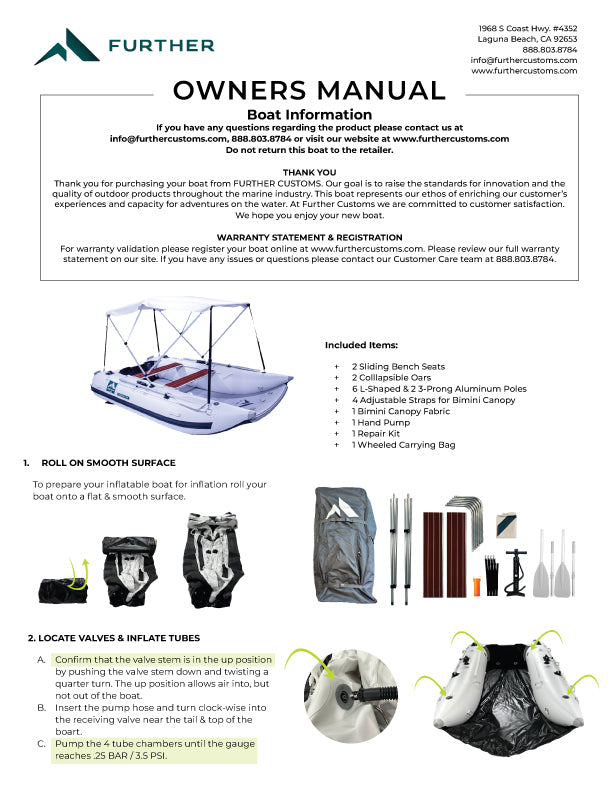
Whether you’re preparing for your first launch or packing up after a long day on the water, the Laguna Catamaran User Guide is designed to help you get the most from your inflatable boat. Explore step-by-step instructions for inflating, assembling, deflating, packing, transporting, and storing your Laguna catamaran, along with helpful setup tips, recommended PSI levels, motor mounting guidance, and long-term care recommendations. Built to make ownership simple, so you can spend more time exploring coastlines, harbors, and hidden anchorages with confidence.

Catamaran Instructional Video
What is the recommended inflation pressure?
Inflate the tubes to 3 to 3.5 PSI and the floor to 10 to 12 PSI. During setup, you may find it easier to initially inflate one side tube to approximately 1 PSI before sliding the seats into position. Once the seats are installed and adjusted, continue inflating the side tubes to the recommended operating pressure.
3.5 PSI
Tubes
10-12 PSI
Floor
Download:
FAQ: Outboard Engines
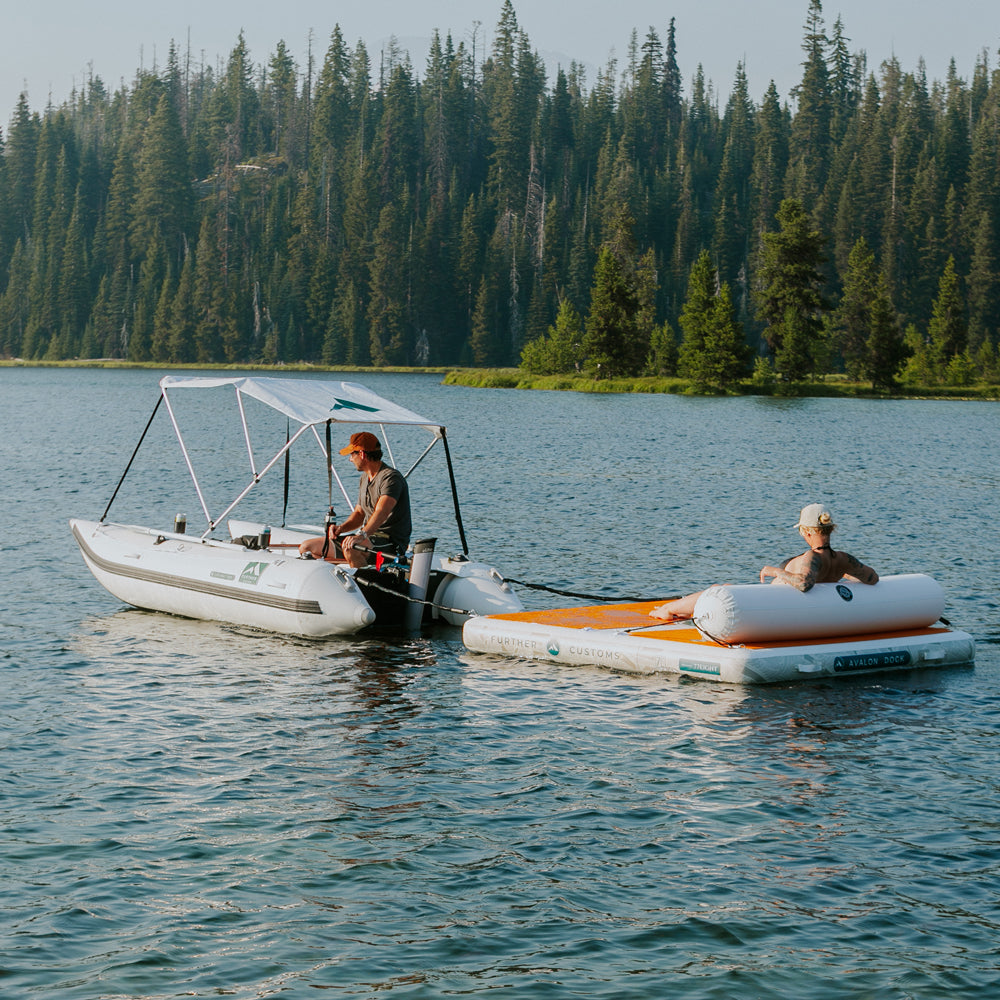
Choosing the right outboard engine for your Laguna catamaran depends on how you plan to use the boat, including your desired speed, range, passenger load, and where you plan to explore. Whether you are looking for a lightweight electric outboard for quiet lake cruising or a larger gas engine for coastal adventures and planing performance, the following FAQ section is designed to help you compare options and determine the best engine setup for your needs.
Which engine shaft length is recommended?
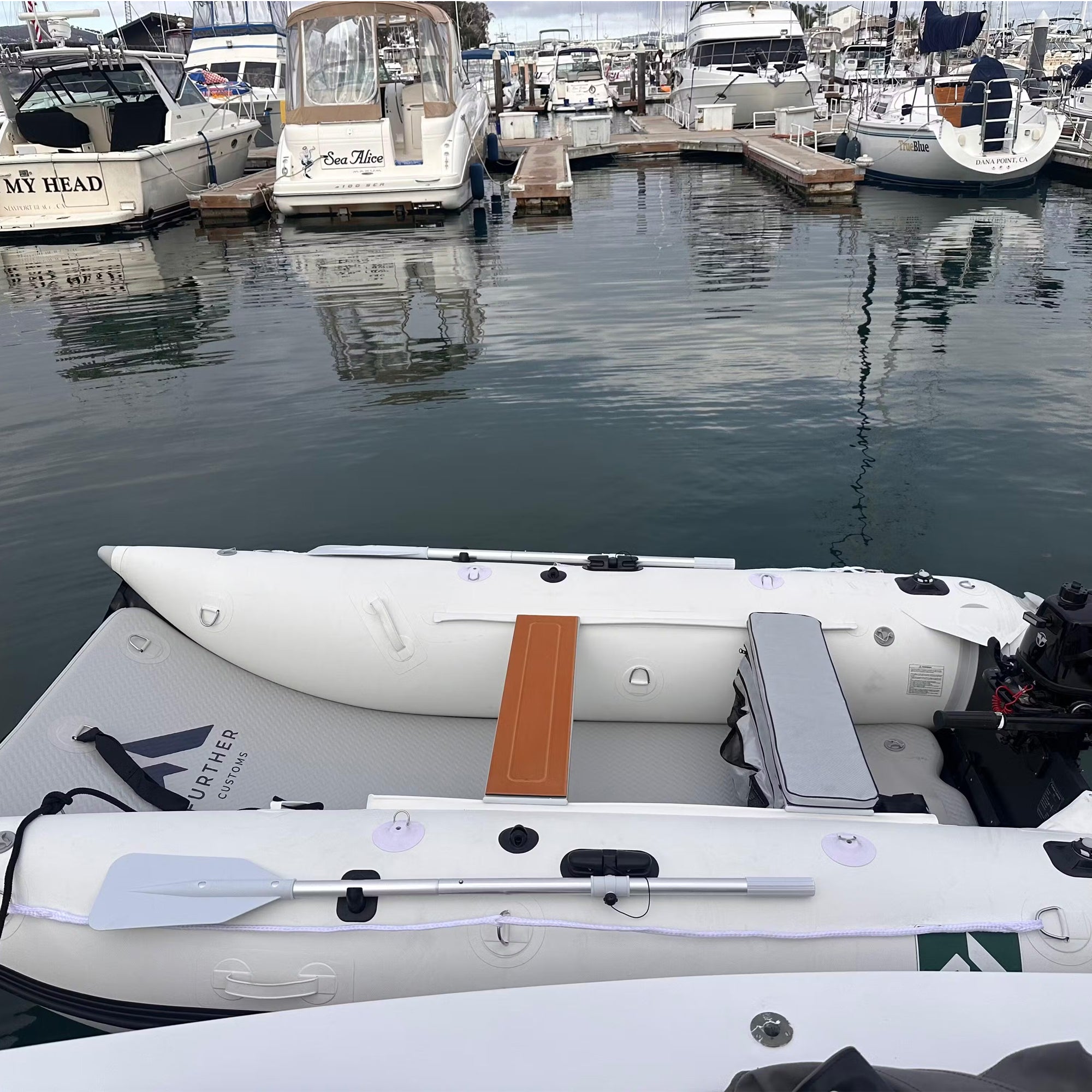
The Laguna catamaran features a 15" transom height and is designed specifically for short shaft outboard engines. For proper motor alignment and performance, we only recommend using short shaft outboards with the Laguna 290 and Laguna 330.
What is the engine capacity of the Laguna 290 & 330 catamarans?
The Laguna 290 inflatable catamaran is rated for outboard engines up to 10 HP, while the Laguna 330 is rated for engines up to 15 HP. Both models are compatible with gas and electric outboard motors, offering a balance of portability, stability, and performance for tenders, coastal exploring, fishing, and recreational boating.
What size engine do you recommend?
For calm lakes, harbors, and short adventures, we recommend a minimum 500W or 1 HP equivalent electric outboard. While smaller motors work well for relaxed cruising, you will generally want at least a 6 HP gas outboard to get virtually any inflatable boat on plane with a single rider. For improved acceleration, better planing performance, and carrying additional passengers or gear, we recommend at least an 8 HP engine. In general, if you are considering a gas outboard, we recommend choosing the largest engine size and weight that you feel comfortable lifting, transporting, and storing.
Do you recommend an electric or gas engine?
The best engine choice depends on how and where you plan to use your Laguna catamaran. Electric outboards are ideal for calm lakes, harbors, marinas, and shorter adventures where quiet operation, low maintenance, lightweight portability, and ease of use are priorities. They are especially enjoyable for relaxed cruising and tender applications.
Gas outboards are generally better suited for longer distances, coastal conditions, stronger currents, carrying multiple passengers, or situations where higher speeds and maximum range are important. They also provide stronger acceleration and are more capable of getting the boat on plane, especially with additional weight onboard.
For many customers, the decision ultimately comes down to balancing portability and simplicity versus maximum performance and range. If you plan on taking shorter trips and are not in a rush, an electric outboard should fulfill your needs well. However, if you plan to travel farther distances and at higher speeds, a gas outboard will generally be the better option.
What maintenance does an electric engine outboard require?
Gas outboards require more routine maintenance than electric motors due to their fuel systems and moving engine components. Typical maintenance includes changing the engine oil, flushing the motor with fresh water after use, and periodically servicing the carburetor or fuel system. It is also important to properly stabilize the fuel if the engine will be stored for extended periods. Regular maintenance helps ensure reliable starting, performance, and long-term durability.
What maintenance does a gas outboard engine require?
Gas outboards require more routine maintenance than electric motors due to their fuel systems and moving engine components. Typical maintenance includes changing the engine oil and lower unit oil, replacing spark plugs and fuel filters, flushing the motor with fresh water after use, inspecting the impeller, and periodically servicing the carburetor or fuel system. It is also important to properly winterize and stabilize the fuel if the engine will be stored for extended periods. Regular maintenance helps ensure reliable starting, performance, and long-term durability.
FAQ: Maintenance & Care
Use this text to share information about your product or shipping policies.
Can the boat remain inflated?
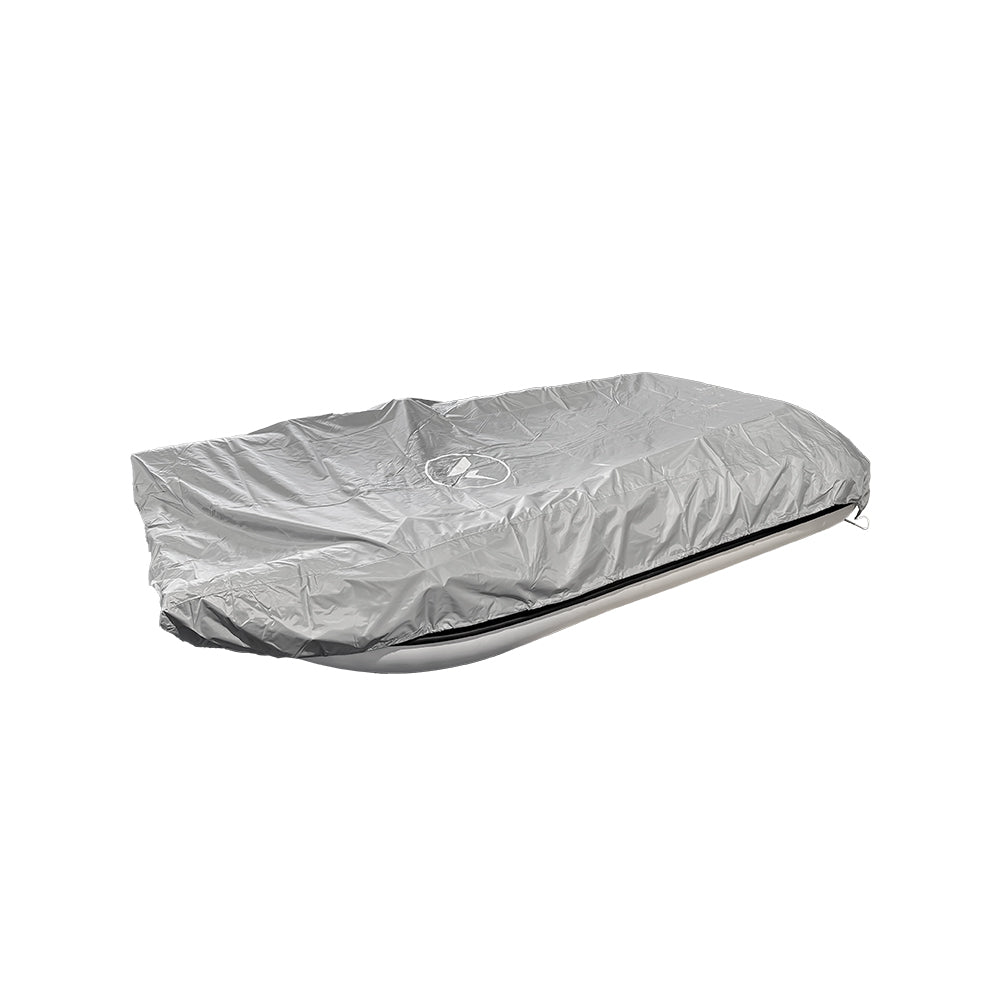
Yes. The Laguna catamaran can remain inflated for extended periods of time and may be stored inflated on a dock, davits, swim platform, or trailer when desired. If storing the boat inflated outdoors, we recommend occasionally checking and adjusting air pressure as temperature changes can affect PSI levels. Avoid overinflation during hot weather or direct sun exposure, and whenever possible store the boat covered or shaded to help maximize the lifespan of the materials. For additional protection during long-term outdoor storage, we also recommend using our custom UV cover.
Is it safe to repeatedly inflate and deflate the boat?
Yes. The Laguna catamaran is designed to be repeatedly inflated and deflated for transport and storage. The hull utilizes premium drop-stitch construction and thermally welded seams designed to withstand regular setup and pack-down cycles. To maximize the lifespan of the boat, we recommend allowing the boat to dry before long-term storage, avoiding unnecessary dragging across rough surfaces, and storing it in a cool, dry area when not in use.
Any question?
You can contact us through our contact page! We will be happy to assist you.
Recommended Products






CUSTOMER CARE TEAM
Phone: 888.803.8784
Email: info@furthercustoms.com
Hours: Monday – Friday 10am – 5pm PST
Saturday & Sunday – CLOSED
Have a question or curiosity? We are here to help.