
The History Behind Inflatable Docks and Floating Platforms
Inflatable docks, floating swim platforms, and yacht extensions have become a defining part of modern life on the water. Whether tied off the stern of a yacht, anchored at a sandbar, or used as a floating deck at the lake, these platforms are now seen as essential equipment for both leisure and utility.
Despite how common they’ve become, inflatable docks are not the result of a single invention or brand. Instead, they represent the convergence of decades of engineering progress, material innovation, and real-world testing across multiple industries.
To understand how inflatable docks came to be, it helps to look beyond boating and into the origins of the materials that made them possible.

Goodyear Inflatoplane: The Inflatable Plane That Actually Flew
Developed in the 1950s by Goodyear, the Inflatoplane was a fully inflatable aircraft made from pressurized drop-stitch fabric. Designed for military rescue, it could be packed, deployed, and airborne within minutes. Its successful flights proved that air-supported structures could be both rigid and functional, laying the groundwork for modern high-pressure inflatables like docks and platforms.
The Origins of High-Pressure Inflatable Structures
The foundation of today’s inflatable docks begins with the development of drop-stitch technology in the mid-1900s.
Engineered by companies such as Goodyear, drop-stitch construction introduced a method of connecting two fabric layers with thousands of internal fibers. When pressurized, these fibers prevent the material from expanding outward, allowing it to maintain a flat, rigid form.
At the time, this innovation was not intended for recreational use. It was developed for aerospace and defense applications, where engineers needed lightweight structures that could be transported compactly and deployed quickly. Early concepts included inflatable aircraft components and portable structural systems.
This breakthrough introduced a new way of thinking about construction. Instead of relying solely on rigid materials, it showed that air could be used as a structural element when properly contained and reinforced.
From Engineering Concept to Marine Capability
As drop-stitch technology matured, it began to find its way into more practical environments.
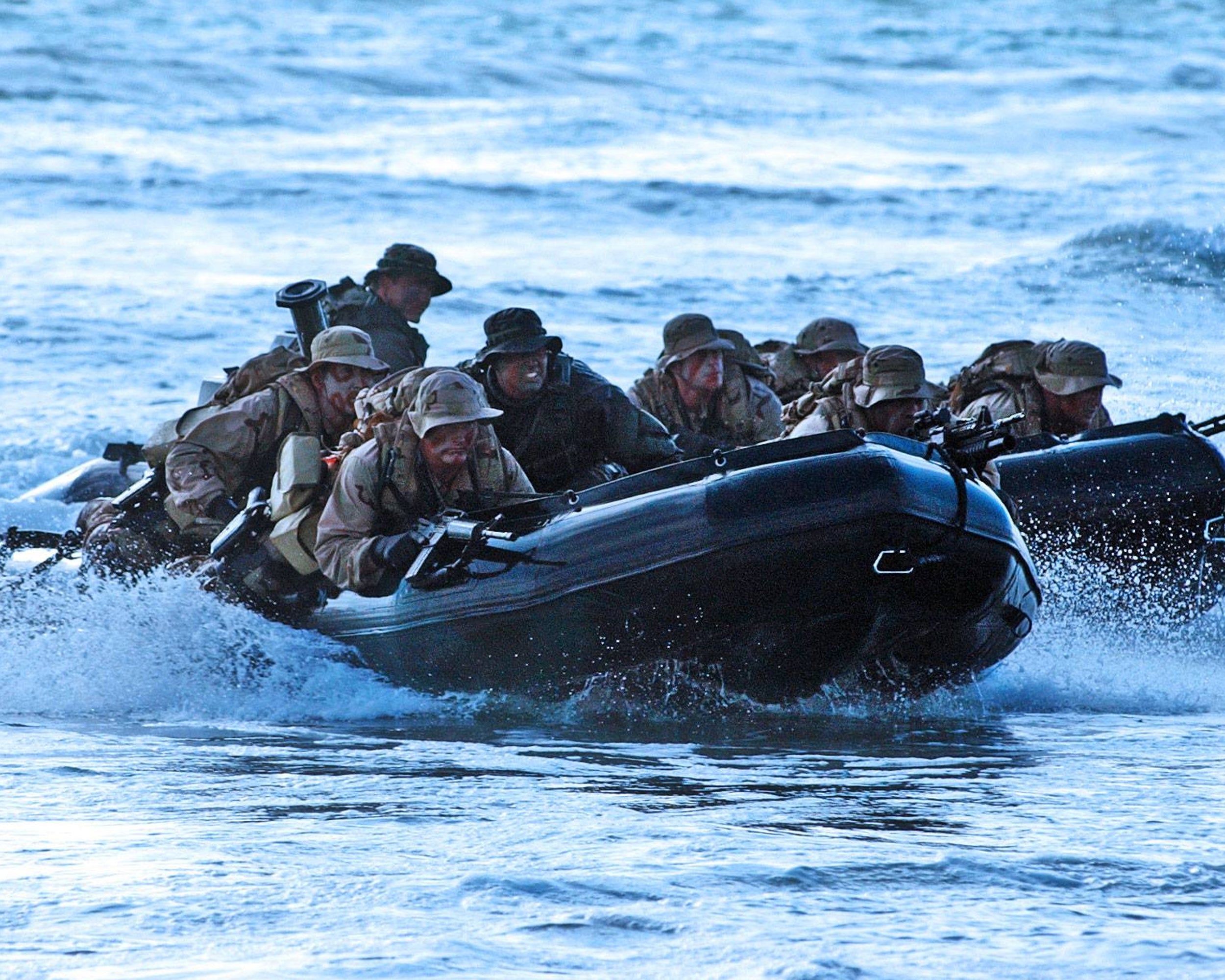
Between the 1960s and 1990s, organizations like the U.S. Navy explored the use of inflatable structures in marine settings. These were not designed for recreation, but for functionality. Inflatable surfaces were tested as temporary platforms, workspaces, and support systems that could be deployed in remote or dynamic conditions.
These applications helped establish confidence in the material’s ability to perform on the water. They demonstrated that high-pressure inflatable surfaces could remain stable, support weight, and withstand environmental stress.
This phase played an important role in bridging the gap between theoretical material science and practical marine use.
The Influence of Whitewater Design
A major advancement in the evolution of inflatable platforms came through whitewater rafting.
In the 1980s and 1990s, manufacturers such as NRS Rafts and AIRE whitewater inflatables began incorporating drop-stitch floors into their rafts. These floors provided a firm, stable surface that could endure constant movement, impact, and heavy use.
This marked one of the first times that drop-stitch technology was used at scale in consumer marine products. It proved that inflatable structures could deliver both performance and durability in demanding environments.
The characteristics developed during this period—rigidity, load-bearing capability, and consistent shape retention—are the same qualities that define modern inflatable docks and floating swim platforms.
The Transition into Recreational and Yacht Applications
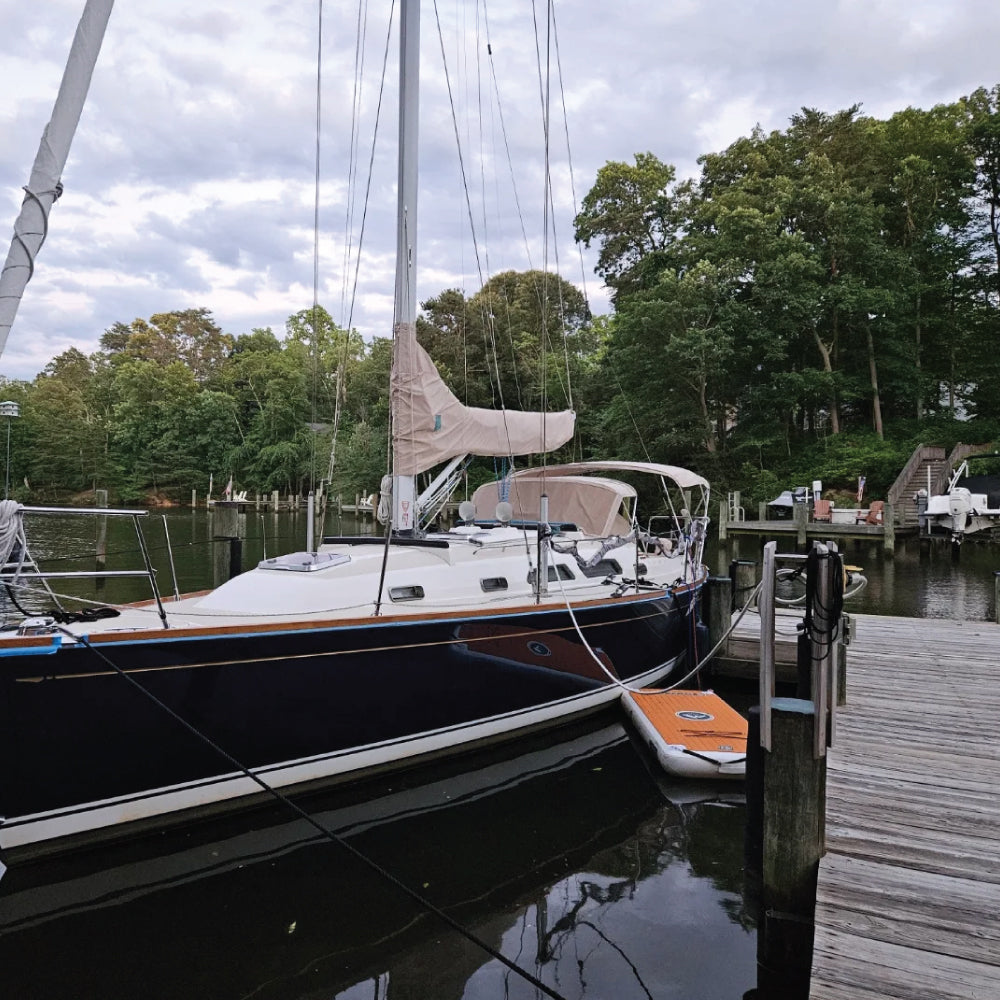
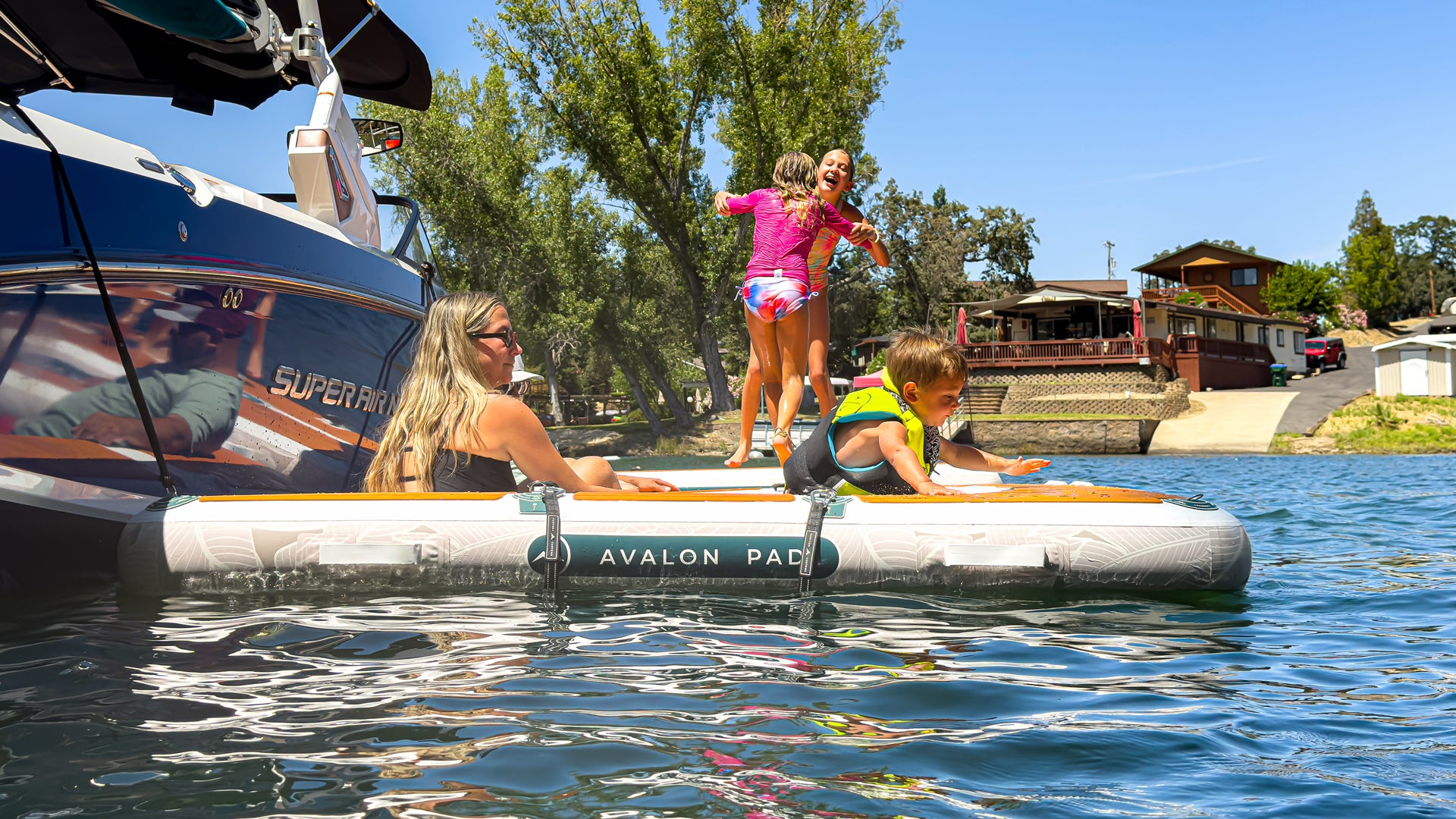
The inflatable dock as we know it today began to emerge in the early 2010s, particularly within the yacht and luxury boating space.
As early as 2009 Lancer industries introduced the Airodock inflatable floating dock to New Zealand. Though companies like Nautibuoy Marine were among the early adopters to bring inflatable platforms into the US market. Their designs focused on creating clean, functional surfaces that could extend the usable area of a vessel while maintaining a teak aesthetic cohesive with traditional yacht materials.
These inflatable platforms served multiple purposes. They acted as swim platforms, boarding areas, and social spaces, effectively transforming the area around a boat into an extension of the onboard experience.
As awareness grew, other brands such as BOTE and Solstice Watersports helped bring inflatable docks to a broader audience. What began as a yacht accessory quickly expanded into a versatile product used across lakes, coastal environments, and recreational boating.
The Expansion into Modular Floating Systems
As the category continued to develop, inflatable docks evolved beyond standalone platforms into modular systems.
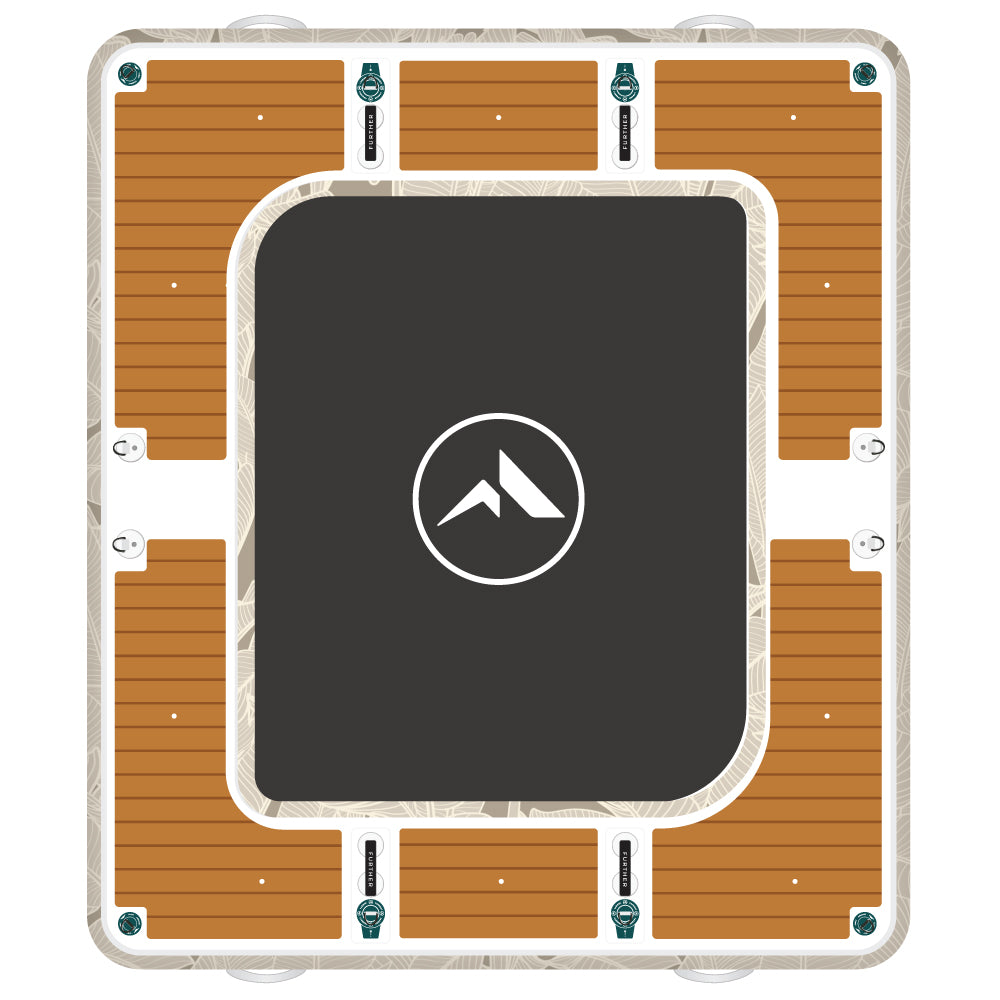
Brands like YACHTBEACH introduced designs that allowed multiple platforms to connect, creating larger floating layouts. These systems enabled users to build out custom configurations that functioned as floating lounges, social hubs, or extended deck spaces.
This progression redefined how inflatable docks were used. Rather than serving a single purpose, they became adaptable environments that could be tailored to different settings and experiences.

The material innovation that made inflatable platforms possible.
The Birth of Drop-Stitch Technology
The foundation of inflatable docks begins with the invention of drop-stitch fabric by Goodyear. Originally developed for aerospace and military use, this innovation made it possible to create rigid, high-pressure inflatable structures that could hold a flat shape. This breakthrough is what ultimately enabled the creation of modern inflatable platforms.
Proving inflatable structures could perform on water
Military and Marine Validation
Following its development, organizations like the U.S. Navy tested inflatable structures in marine environments. These experiments focused on utility, using inflatable surfaces as working platforms and transportable structures. This phase confirmed that high-pressure inflatable materials could be stable, durable, and reliable in real-world conditions.

The first widespread consumer use of rigid inflatable floors
Whitewater Raft Innovation
Joe and Jay had the rare honor of bringing the Laguna 330 to Lake X for on-water testing with the Mercury Avator electric outboard. Lake X is a legendary, invitation-only testing facility revered throughout the marine industry, where Mercury has validated generations of engines and marine technology away from public view. Being invited to test there marked a major milestone for Further Customs, validating the Laguna 330’s performance and reinforcing its position as one of the most capable and refined inflatable tenders purpose-built for pairing with electric outboard engines.
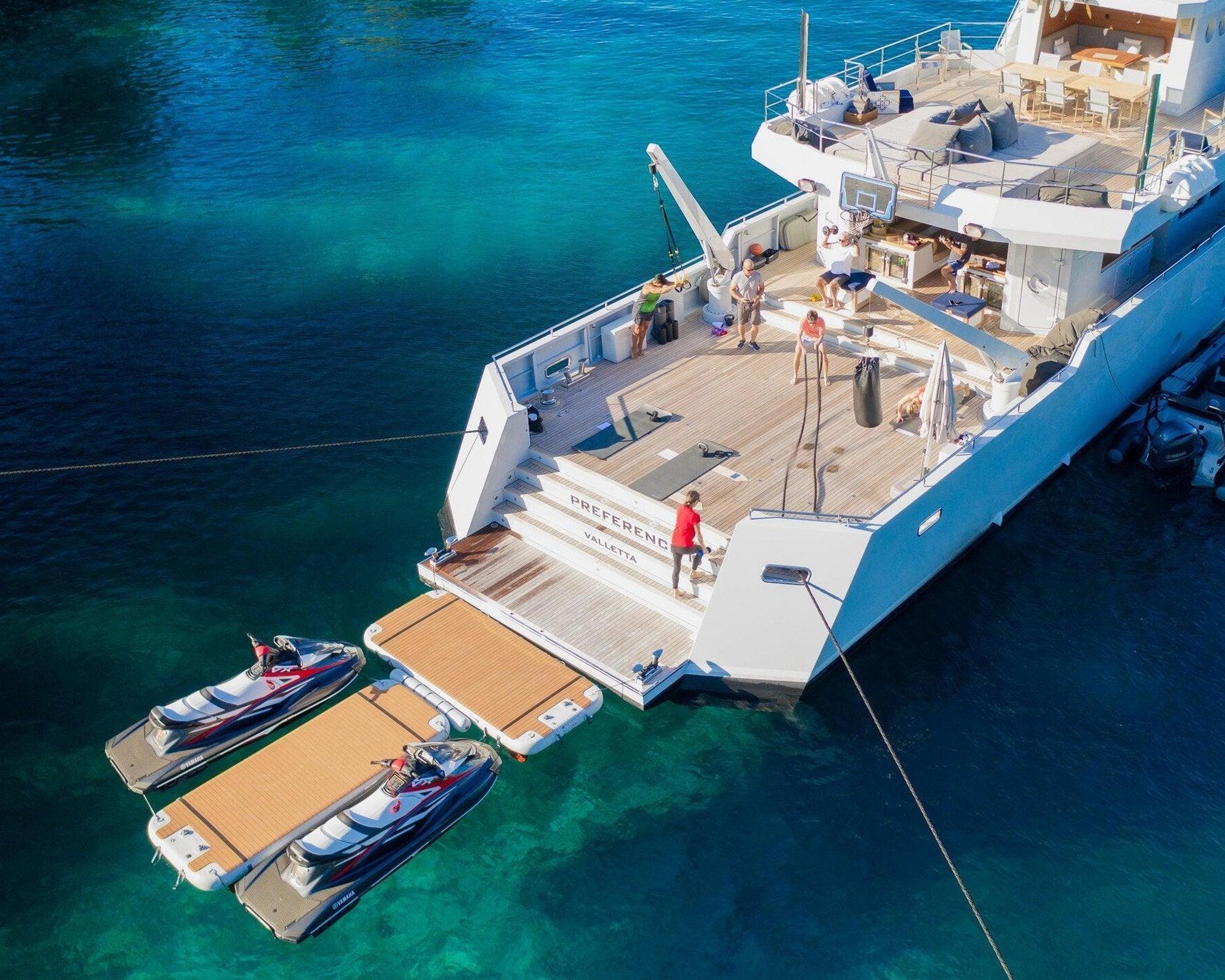
Transitioning into yacht swim platforms and boat extensions
The First Modern Inflatable Docks
In the early 2010s, brands like Nautibuoy Marine introduced inflatable docks designed specifically for yachts. These platforms expanded usable space on the water and functioned as floating swim platforms, boarding docks, and yacht extensions. They are widely recognized as some of the first modern inflatable dock systems.
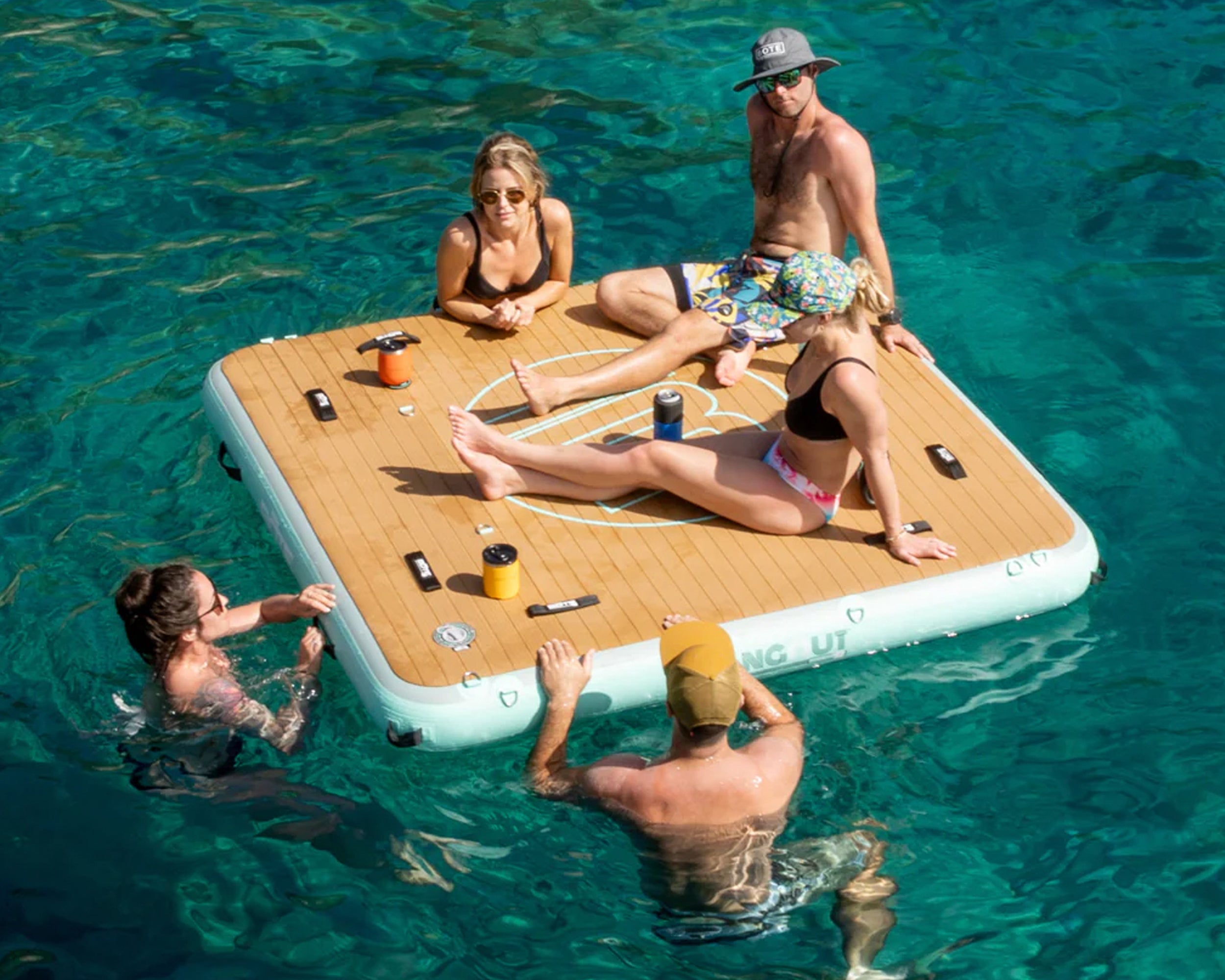
Bringing inflatable docks to lakes, sandbars, and everyday boaters
Expansion into Recreational Use
As the category gained visibility, companies such as BOTE, Paddle North and Solstice Watersports expanded inflatable docks beyond yachts. These floating platforms became popular for lakes, marinas, and sandbars, making them accessible to a much wider audience.
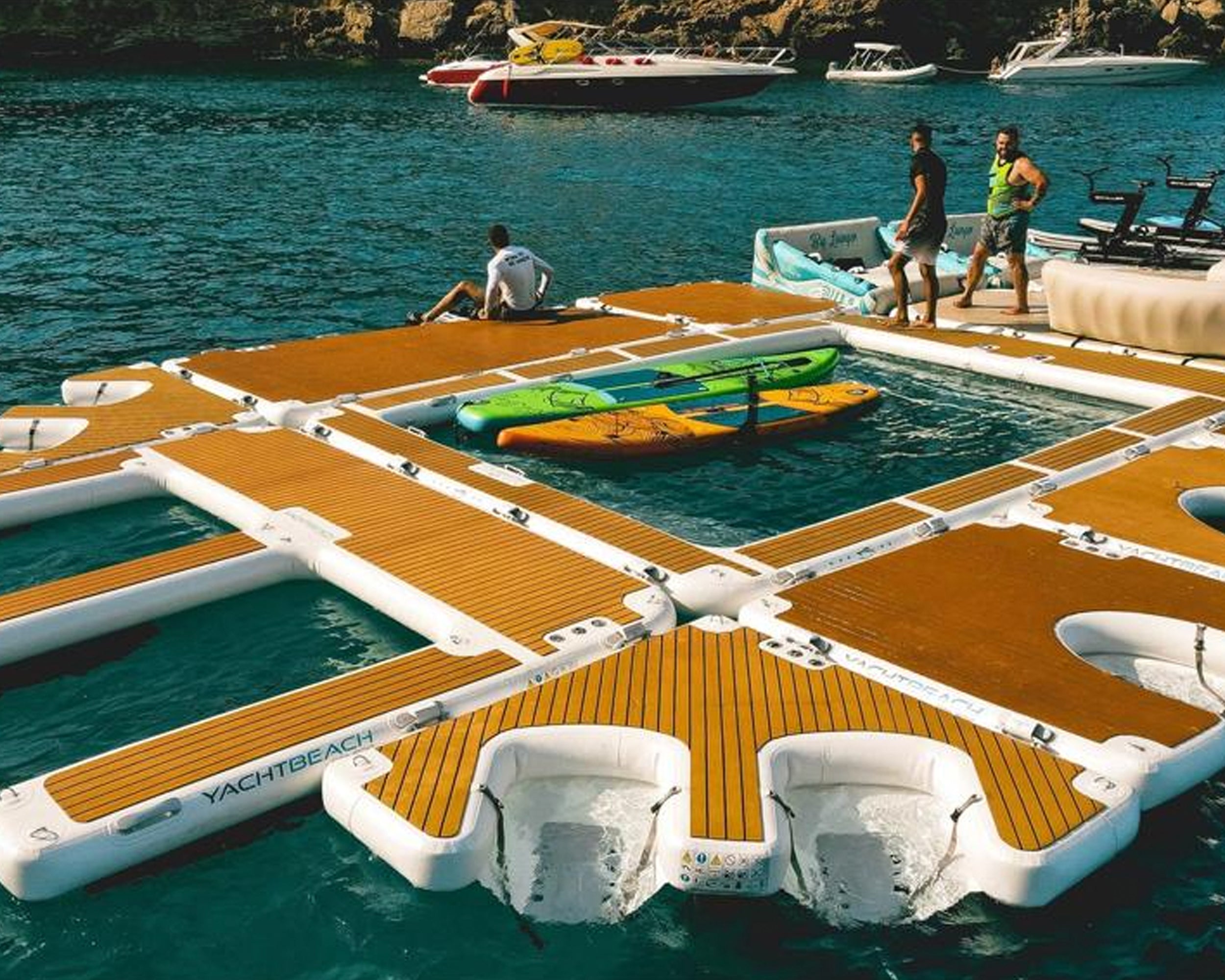
The rise of interconnected inflatable dock environments
Modular Floating Systems
Brands like YACHTBEACH and FUNAIR introduced modular inflatable dock systems that allow multiple platforms to connect. These systems created larger floating environments that function as full yacht extensions, floating decks, and social spaces on the water.
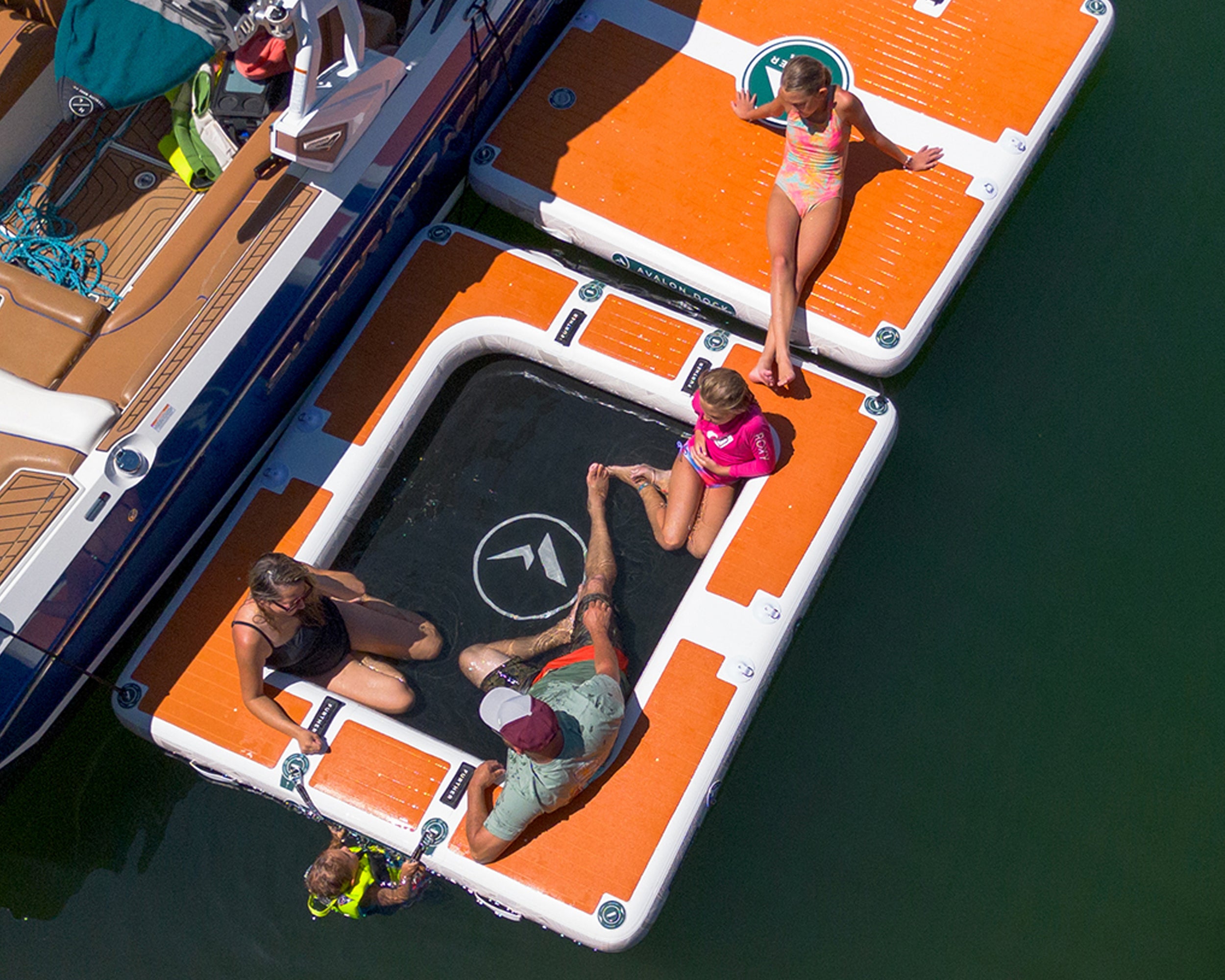
Advancing materials, construction, and on-water experience
Continued Innovation
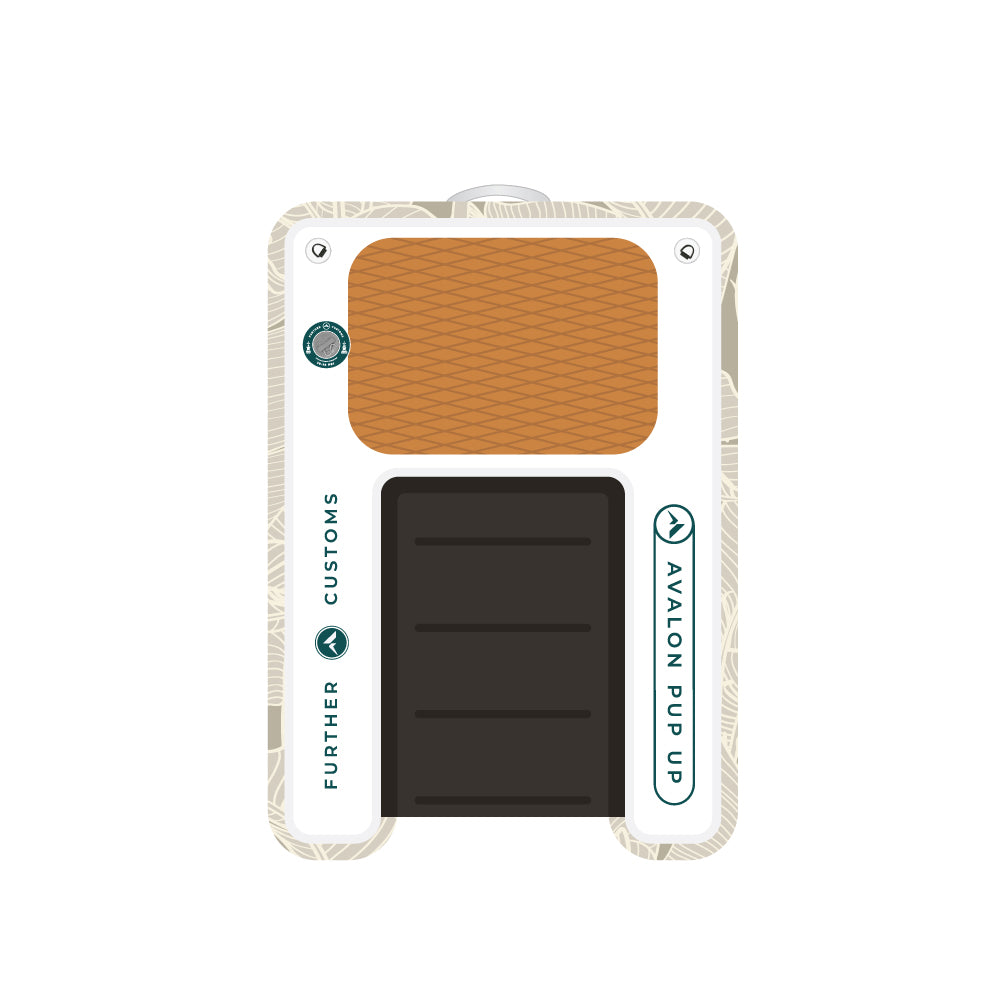
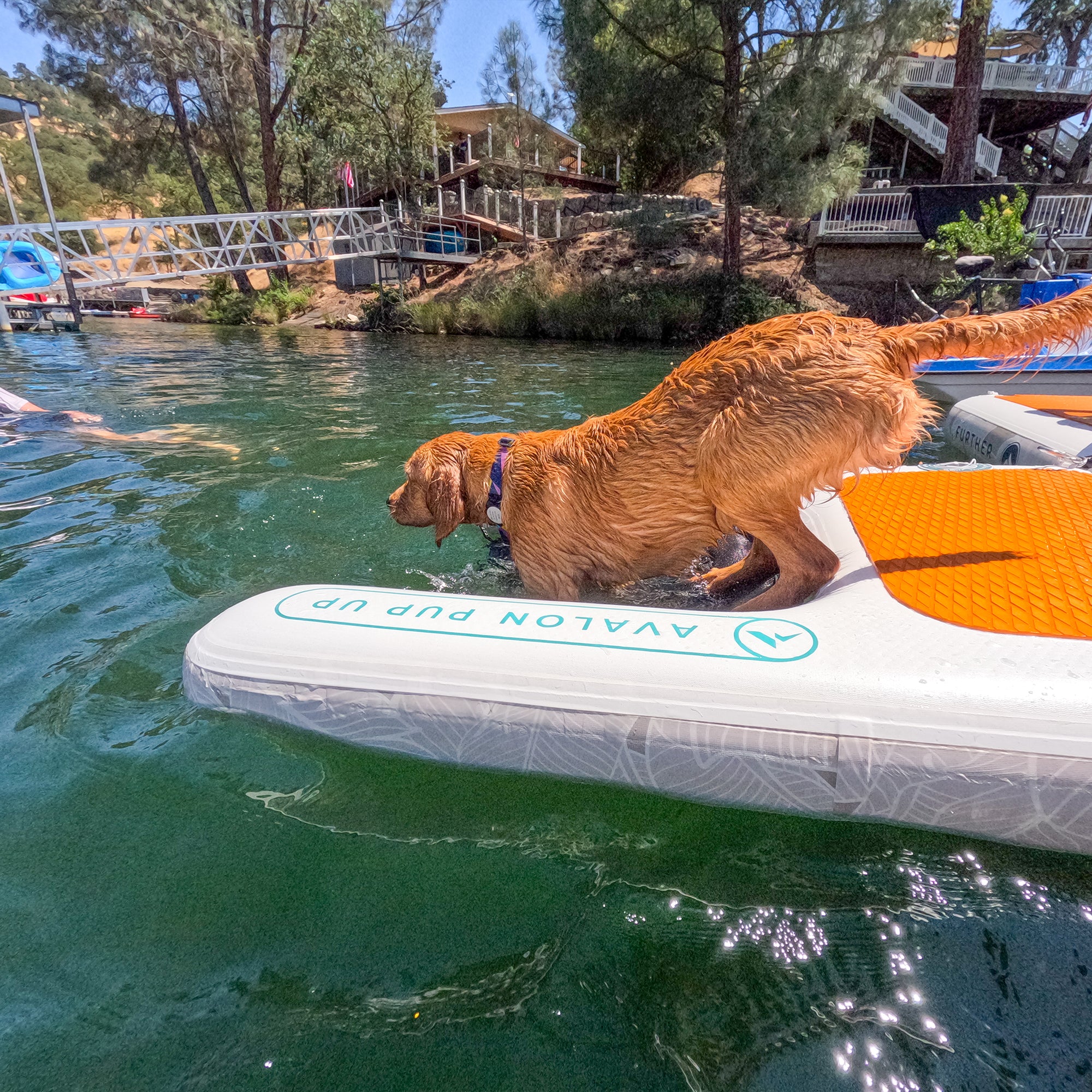
Today’s inflatable docks, floating swim platforms, and yacht inflatable decks continue to evolve through improved materials, higher pressure tolerances, and refined construction techniques. While the core technology dates back decades, modern design and engineering continue to elevate performance, durability, and the overall experience on the water. Designs have expanded in dog ramps, water hammocks and boating furniture.
A Product Shaped by Progression
The inflatable dock, floating swim platform, and yacht inflatable deck are not the result of a single moment of invention.
They are the outcome of a continuous progression. Advances in aerospace introduced the material. Military and marine testing validated its functionality. Whitewater manufacturers refined its performance. Recreational and yacht brands adapted it for lifestyle use.
Each phase contributed to what these products are today.
The Next Phase of Inflatable Dock Design
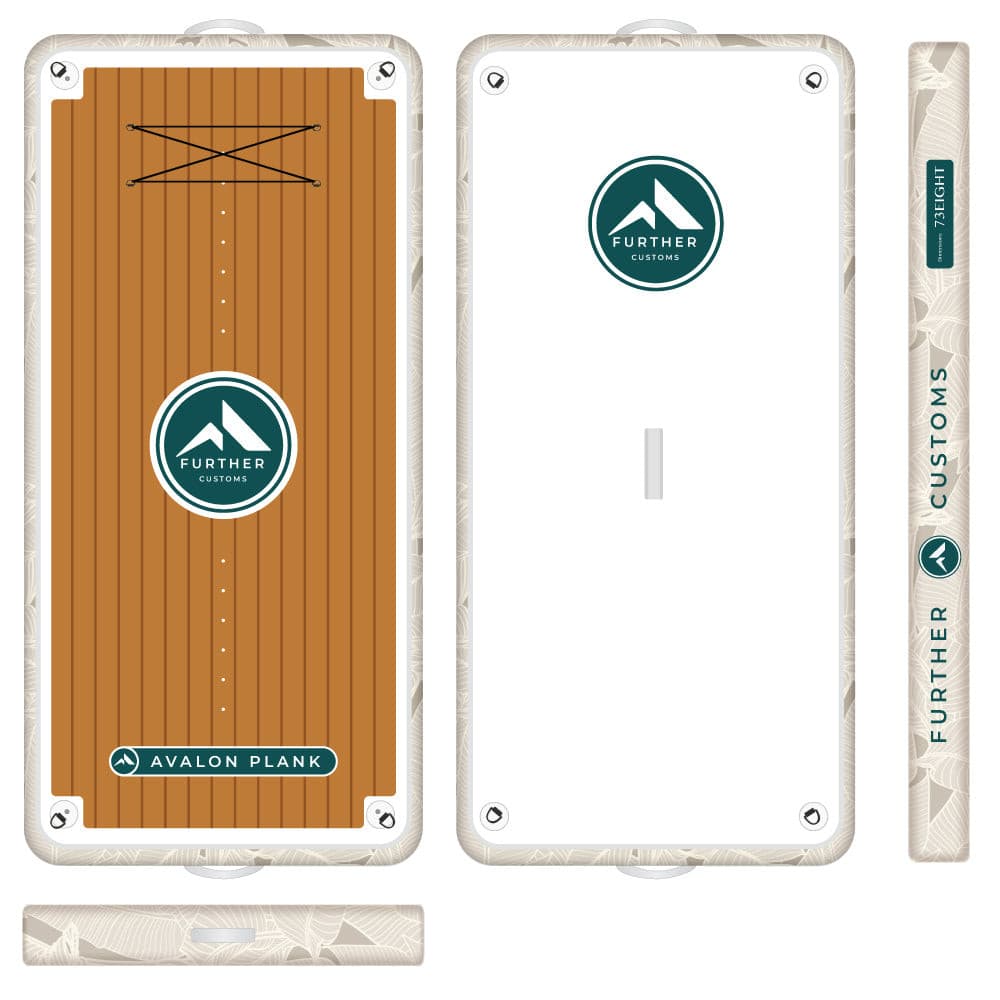
Further Customs did not originate the inflatable dock category, nor claim to be its inventor. The foundation of these products was established long before the current generation of marine brands entered the market.
What defines Further Customs is a commitment to advancing that foundation.
By focusing on premium-grade materials, refined construction techniques, and intentional design, the goal is to elevate both performance and longevity. Every inflatable dock, floating platform, and yacht extension is approached as an opportunity to improve how these products function and how they are experienced on the water.
The evolution of inflatable docks is ongoing. Through continued innovation and attention to detail, Further Customs contributes to that progression by delivering products that are built to perform at a higher standard while enhancing the way people connect with the water.
The Next Evolution: The Inflatable Water Hammock
A new way to experience floating comfort on the water.
The latest step in the evolution of inflatable docks and floating platforms is the introduction of the inflatable water hammock. By integrating a mesh center into a high-pressure drop-stitch frame, this design allows users to lounge partially submerged while remaining fully supported. It blends the structure of a floating dock with the comfort of being in the water, creating a more immersive and relaxed experience. As inflatable platforms continue to evolve, the water hammock represents a shift toward designs that prioritize not just space and utility, but how people feel and connect with the water itse