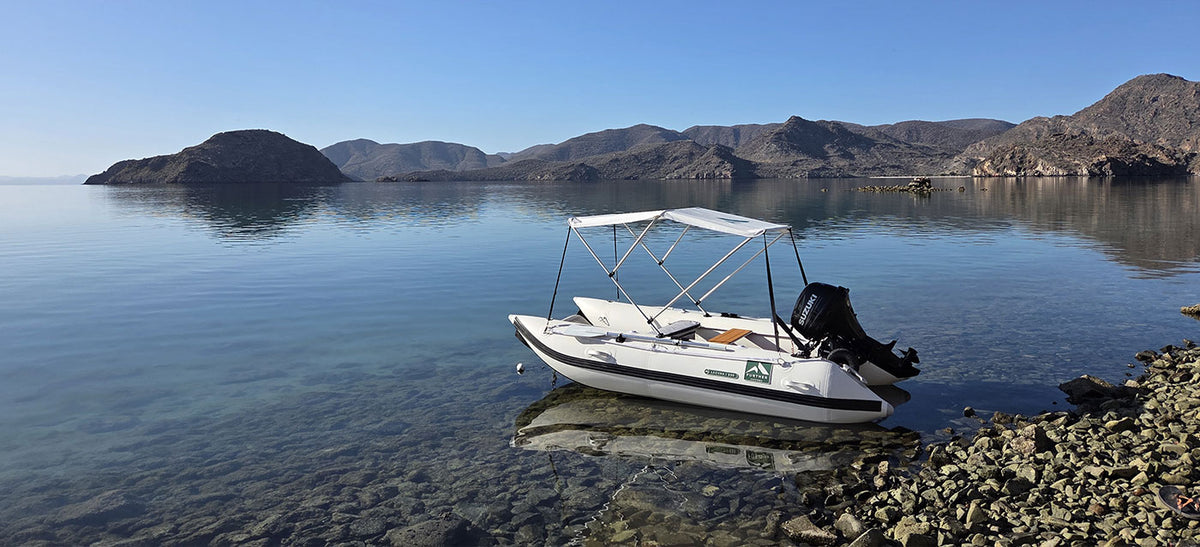
A portable twin-hull boat can transform an overland trip, opening access to remote fishing grounds, dive sites, reefs, and stretches of coastline beyond the reach of shore.
For anglers, divers, and overland travelers, some of the most memorable places on the water are also the hardest to reach. Remote beaches may have no marina, boat ramp, fuel dock, or other infrastructure normally associated with boating. An inflatable catamaran changes that equation by allowing you to carry a capable motorized boat with your vehicle, launch directly from shore, and explore well beyond the limits of the beach. That combination of portability, stability, shallow draft, and usable space makes a twin-hull inflatable particularly well suited for diving, snorkeling, spearfishing, and fishing off the grid.
Turning an Overland Vehicle Into a Base Camp on the Water
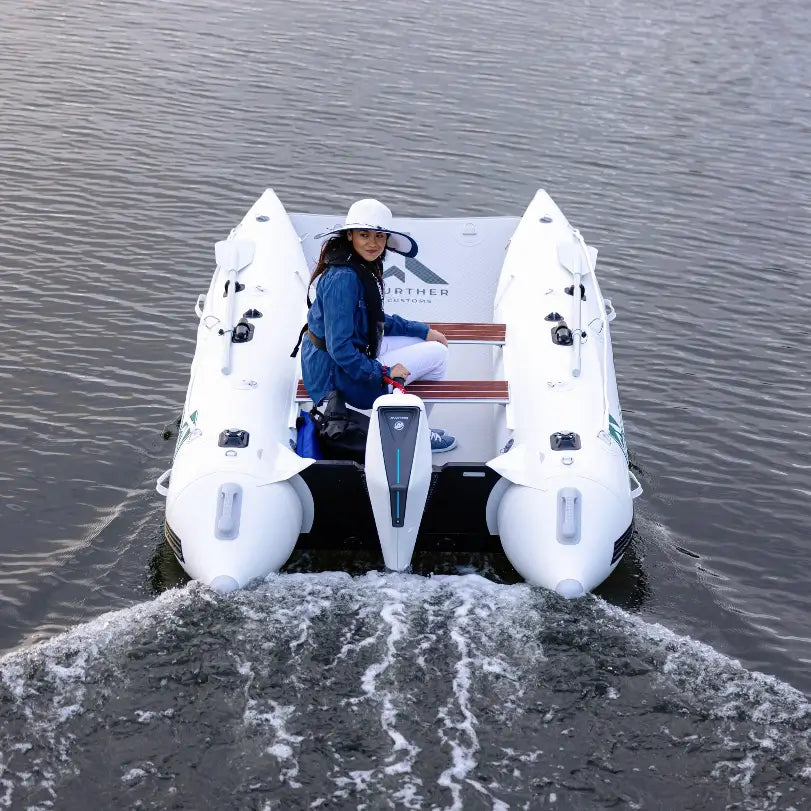
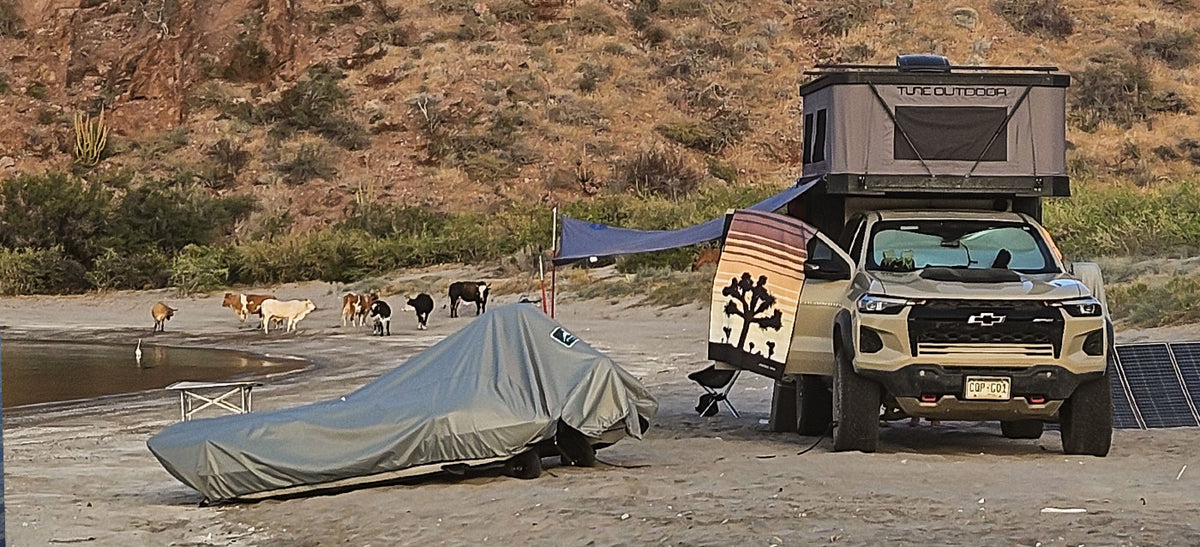
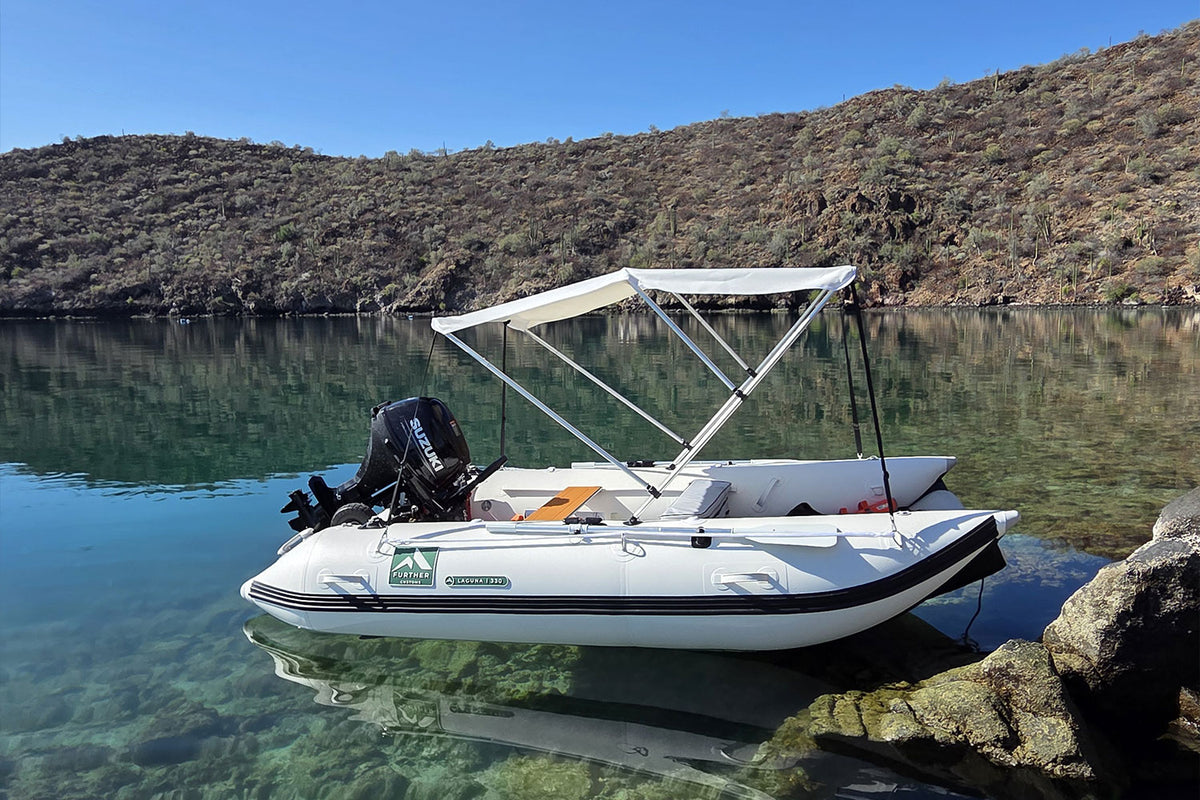
One of the greatest advantages of an inflatable boat for overlanding is that you don't need to tow a trailer everywhere you go. The boat can be deflated and packed for transportation, then inflated when you reach a destination worth exploring. For travelers following long stretches of undeveloped coastline, that freedom can completely change the experience. Instead of planning the trip around marinas and established launch ramps, you can establish camp near the water and use the boat to explore the surrounding coastline. Our Laguna inflatable catamarans were designed around this kind of versatility. Their lightweight inflatable construction makes them practical to transport while still providing the stability, interior space, and outboard capability needed for much more than simply paddling around near shore.
A Real-World Baja Adventure with Drifter Journey
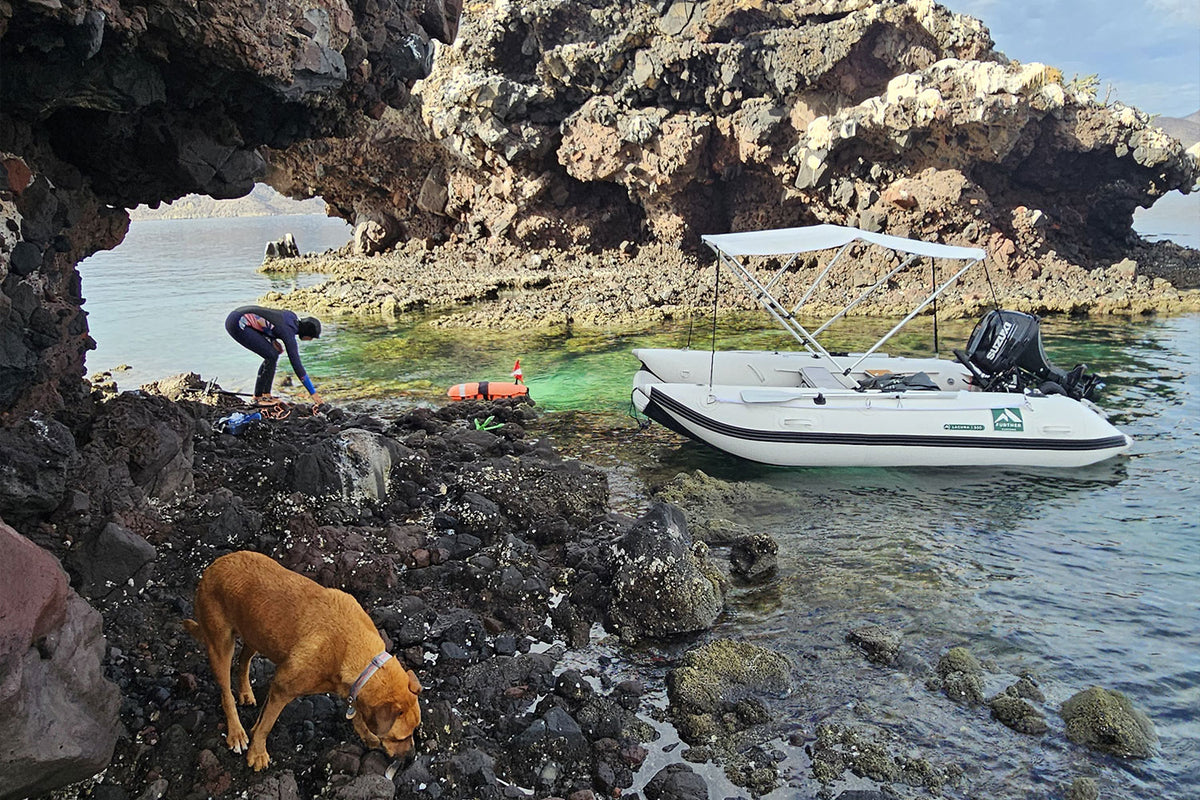
One of our customers, Drifter Journey, put this concept into practice during a multi-week overland adventure along the Baja coastline. Traveling with his wife and dog, he carried a Laguna as part of their setup while camping and exploring remote stretches of coast. Instead of being limited to what they could reach from shore, the catamaran became another tool for exploration. They could launch from the beach, head out to dive and spearfish, explore the surrounding coastline, and return to camp with freshly caught fish. In places where the nearest marina or grocery store may be miles away, the ability to head onto the water and catch dinner adds an entirely different dimension to off-grid travel. It demonstrates one of our favorite things about a portable boat: your campsite doesn't have to be the end of the road. It can be the beginning of everything you can reach from the water.
Airless transom wheels make remote launches, beach landings, and changing tides easier to navigate without a boat ramp.
From Campsite to Shoreline Without a Boat Ramp
For off-grid boating, transom wheels make remote beach launches and landings considerably easier. They allow an inflatable catamaran to be rolled from a campsite or vehicle to the water across sand, gravel, and uneven terrain, reducing the need to carry a fully rigged boat. They’re equally useful when beaching for the day, especially along coastlines with large tidal changes. If the tide recedes and leaves the boat farther from the water, transom wheels make it much easier to move the boat across the exposed beach and relaunch without waiting for the tide to return.
Why a Twin-Hull Design Works Well for Diving and Spearfishing
Stability becomes especially important when you're loading dive equipment, putting on fins, handling fishing gear, or climbing back aboard from the water. A twin-hull catamaran design creates a wide footprint on the water, helping distribute passengers and equipment across two large inflatable tubes. This provides a stable platform at rest while still allowing the narrow hulls to move efficiently through the water. The oversized tubes also provide substantial buoyancy when carrying people, coolers, dive equipment, fishing gear, and the day's catch. For divers and spearfishers, that stability is valuable before you ever enter the water. There's room to organize equipment, put on a mask and fins, prepare gear, and move around the boat without the unstable feeling associated with smaller kayaks or narrow watercraft.
An Open Bow Makes For Easier Exit & Re-Entry
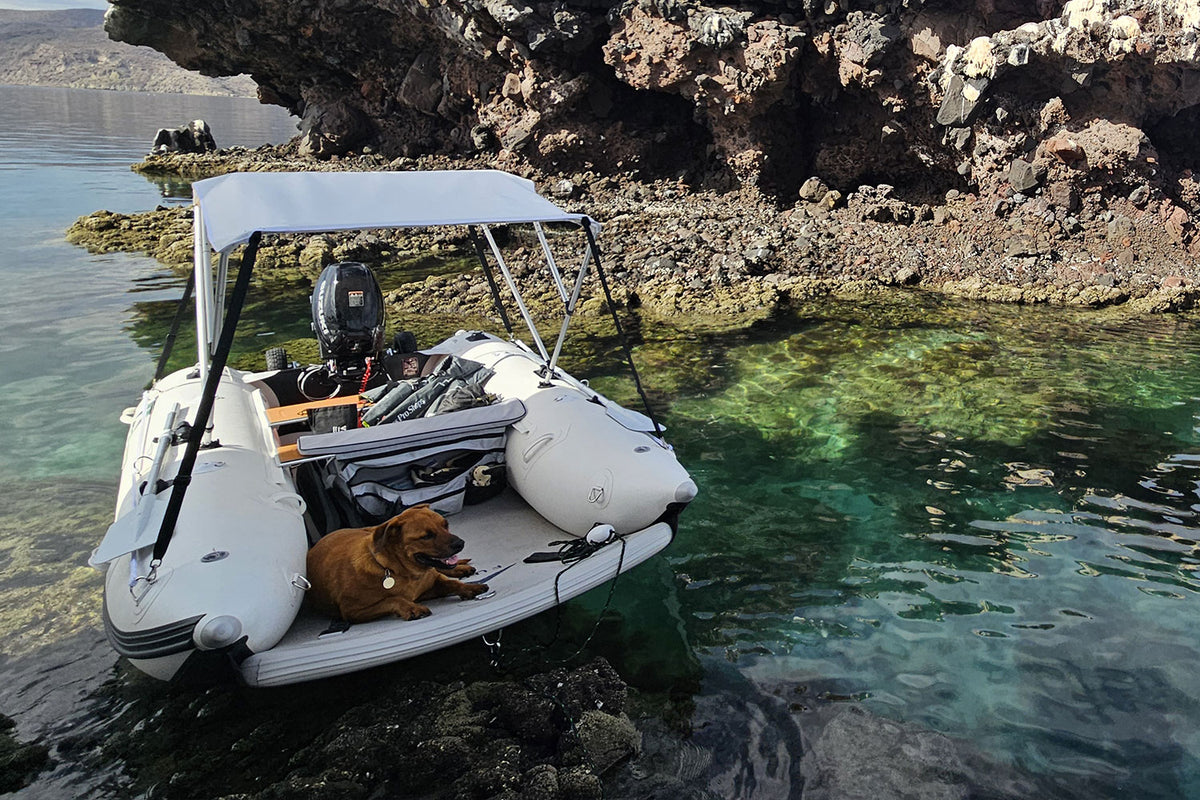
Getting into the water is easy. Getting back into the boat while wearing dive or snorkel equipment can be another story. The Laguna's open bow eliminates the large forward tube found on traditional inflatable dinghies, creating an unobstructed area at the front of the boat. This provides more usable interior space while offering another practical location for entering and exiting the boat. For snorkeling and diving, the open layout provides room for people and equipment without dedicating a large portion of the boat's overall length to an inflatable bow chamber. Combined with the rigid drop-stitch floor, divers have a firm surface beneath their feet once aboard rather than a soft inflatable floor that flexes as weight shifts around the boat.

Shallow Draft Opens Up More Coastline
Remote coastlines rarely provide perfect launch conditions. An inflatable catamaran's shallow draft allows it to operate close to beaches and explore areas that would be more difficult to access with a deeper-draft boat. When conditions permit, the boat can be brought close to shore for loading and unloading rather than requiring a dock. This is particularly useful for overland fishing and diving trips, where a sandy or gravel beach may be your boat ramp. Optional foam-filled transom wheels make shore launches even more practical. Because the wheels are airless, there are no tires to inflate or puncture, and their rugged construction is designed to handle surfaces such as sand and gravel.
Space for Dive Gear, Fishing Equipment and the Catch
Spearfishing and diving can require a surprising amount of equipment. Fins, masks, snorkels, wetsuits, weights, coolers, dry bags, fishing equipment, safety gear, and provisions all compete for space. The Laguna's open layout and rigid floor create a large usable area for organizing equipment while maintaining room for passengers. Built-in accessory mounts also provide opportunities to configure the boat around the day's activity, while integrated rod holders can accommodate fishing rods, dive flags, or stern navigation lights. Rather than designing the boat exclusively around one activity, the goal is to provide a platform that can adapt as the adventure changes. You might spend the morning spearfishing, return to camp for lunch, take the dog exploring in the afternoon, and head back onto the water to fish before sunset.
Electric or Gas Power for Off-Grid Exploration?
Both electric and gas outboards can work well for remote fishing and diving, but they serve different priorities. An electric outboard offers quiet operation, simple starting, minimal maintenance, and exceptional portability. It's an appealing option for shorter trips from camp, snorkeling, fishing, and exploring protected coastline. Solar and portable charging options can also be particularly interesting for an overland setup where travelers already carry auxiliary power systems. A gas outboard generally makes more sense when speed, extended range, or consistent planing performance is the priority. For travelers planning longer runs along the coastline or carrying heavier loads of passengers and equipment, the additional power can be valuable. Our electric outboard collection includes portable options for boaters who prioritize quiet, lightweight propulsion and easy transport. Regardless of propulsion, remote travel requires conservative range planning. Wind, current, waves, passenger weight, equipment, and changing weather can all affect how far a boat can safely travel.
Fish Beyond the Reach of the Beach
Shore fishing limits you to the water you can cast into. A portable inflatable catamaran allows you to leave the beach behind and explore reefs, coves, kelp beds, rocky structure, and other fishing grounds that may otherwise be inaccessible. That can be particularly valuable on an overland trip. You aren't hauling a boat hundreds or thousands of miles simply to have another piece of equipment at camp. You're carrying a way to expand the area you can explore once you arrive. For travelers like Drifter Journey, that meant using the Laguna to hunt, fish, dive, explore, and help put fresh food on the table while spending weeks along the Baja coastline.
Go Further Off the Grid
The appeal of overlanding is the freedom to reach places that aren't always easy to access. A portable inflatable catamaran extends that same philosophy beyond the shoreline. Pack it with your vehicle. Set up camp. Launch from the beach. Explore the coastline. Dive a remote reef. Fish beyond casting distance. Bring dinner back to camp. For divers, spearfishers, anglers, and overland travelers, an inflatable catamaran isn't simply another piece of recreational gear. It's a way to turn remote coastline into a much larger place to explore.
Learn MoreShop Collections